
Doesn’t it kind of figure that a history buff would also enjoy a walk in an old cemetery? Huntsville, Texas was the answer to this, too. We went to Oakwood Cemetery initially because Sam Houston was buried there. Guess what I never took a single photo of? His grave. I’m using stock a photo for that:
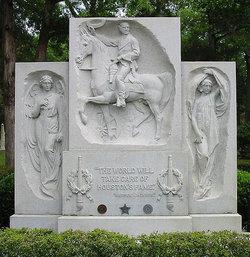
The fact is, I read about the cemetery before we arrived, and it had so many fascinating stories related to it that I let the fact that Sam Houston’s grave was there slip away in my mind.
The Huntsville, Texas Penitentiary is used for many public service works, which included cleaning up this historic cemetery. While doing so, these men noticed the ground was sunken in several places beneath brambles and weeds. The city had the ground tested and found numerous unmarked graves. It is believed these were the graves of slaves. The prisoners asked that they be given crosses, like the ones placed for those who die in prison and are unclaimed. The city of Huntsville and the State of Texas agreed.
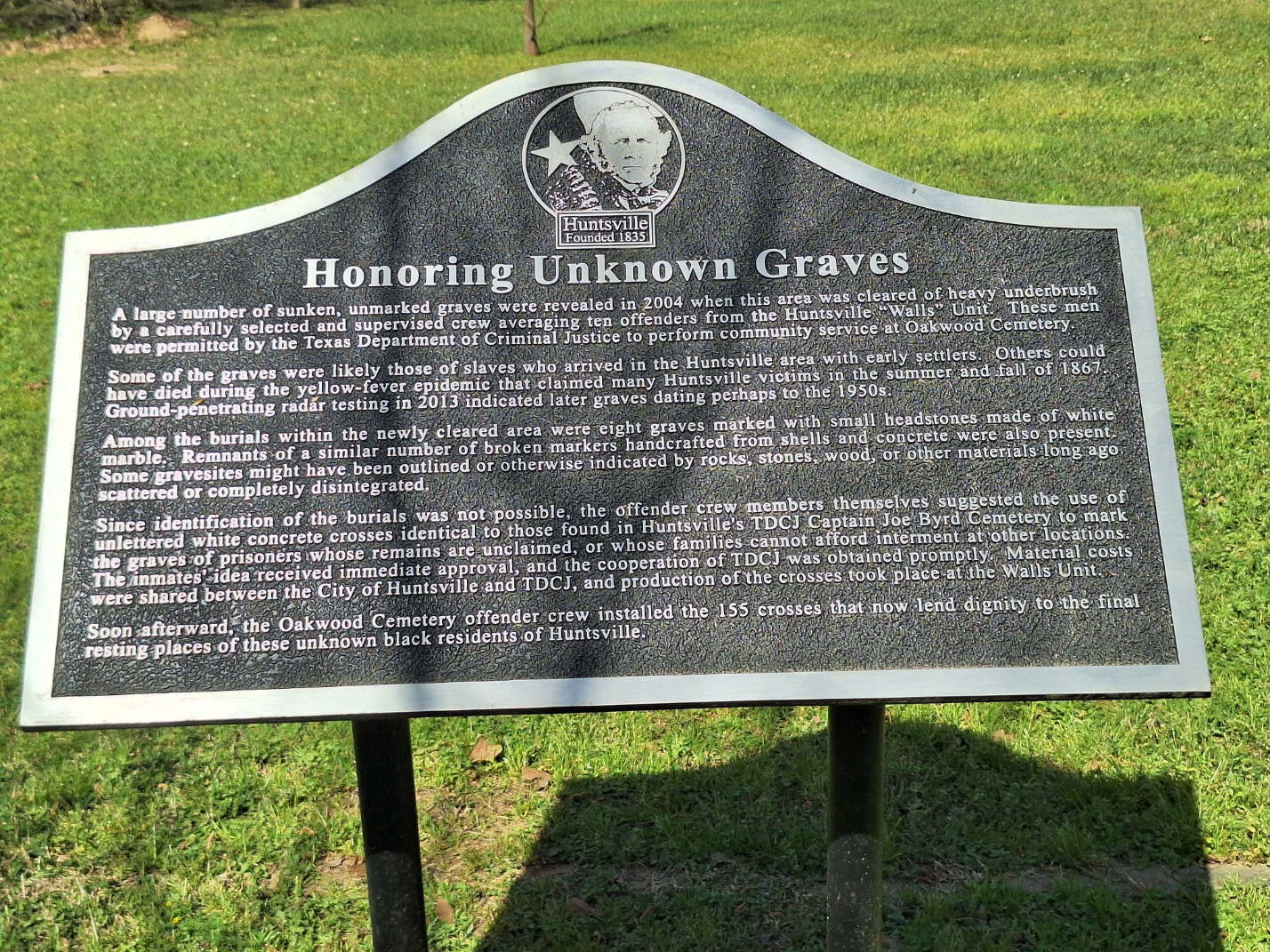
I’ve left this photo large, though you should be able to click on it and read it better. I believe this is important and a great act of kindness, especially since the prisoners wanted to show respect for these unmarked graves and the bodies of the slaves contained within them.
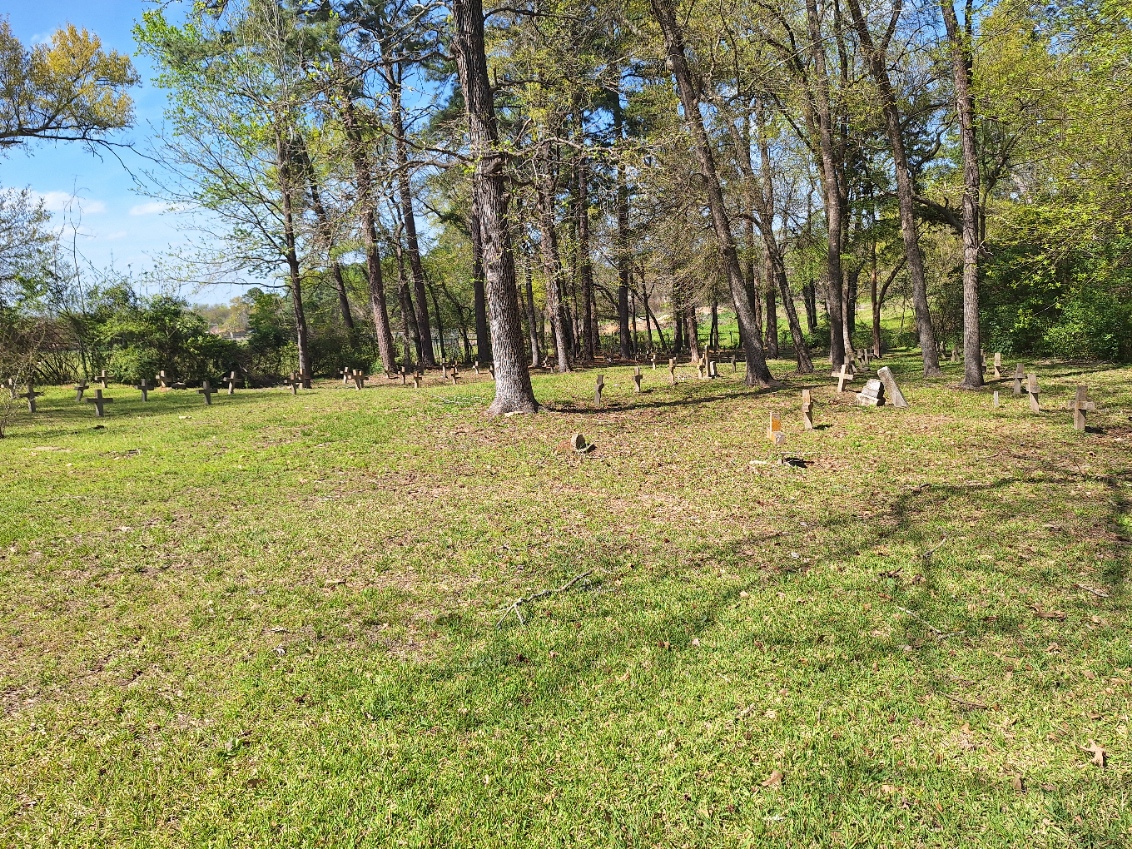
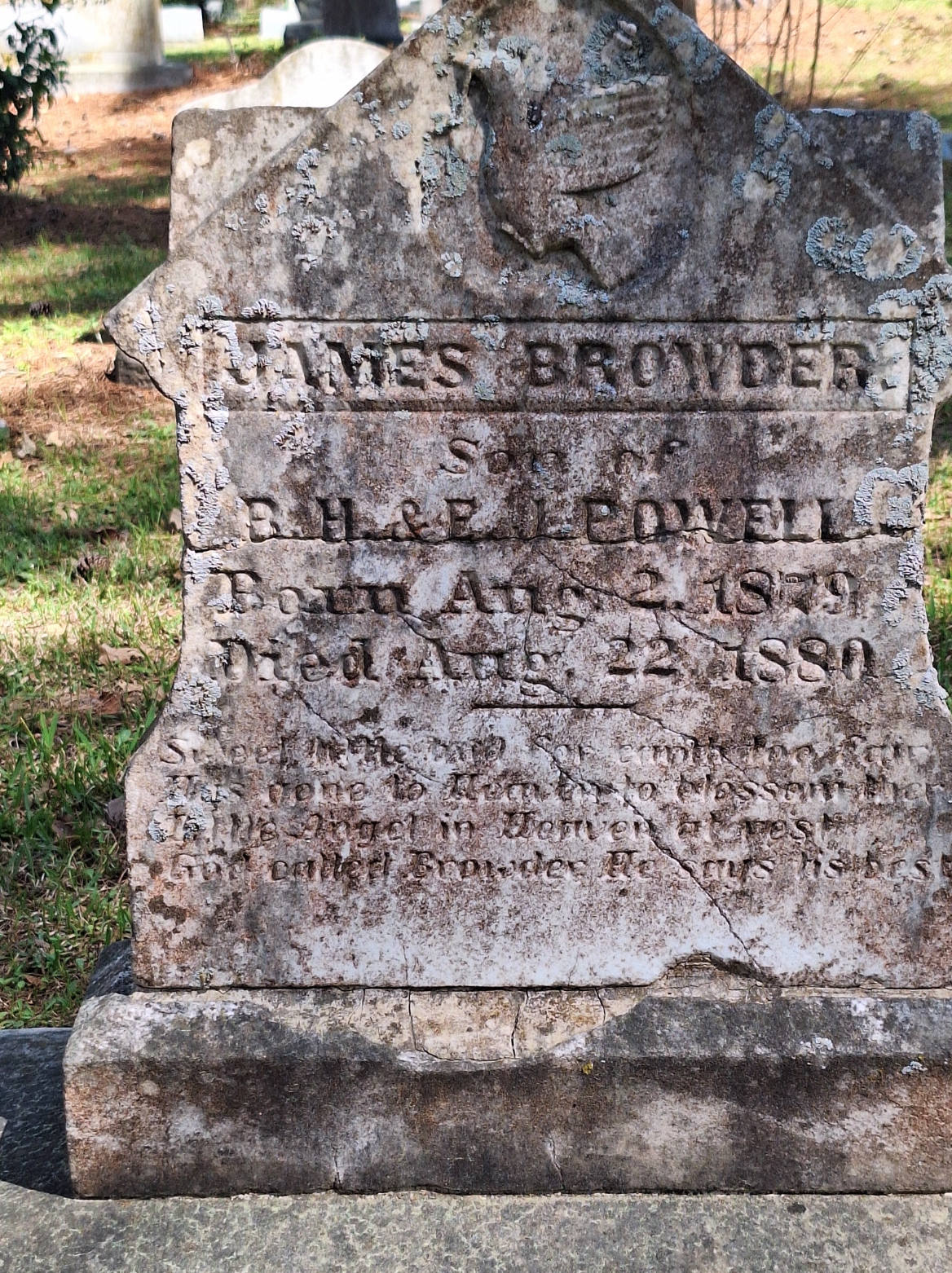
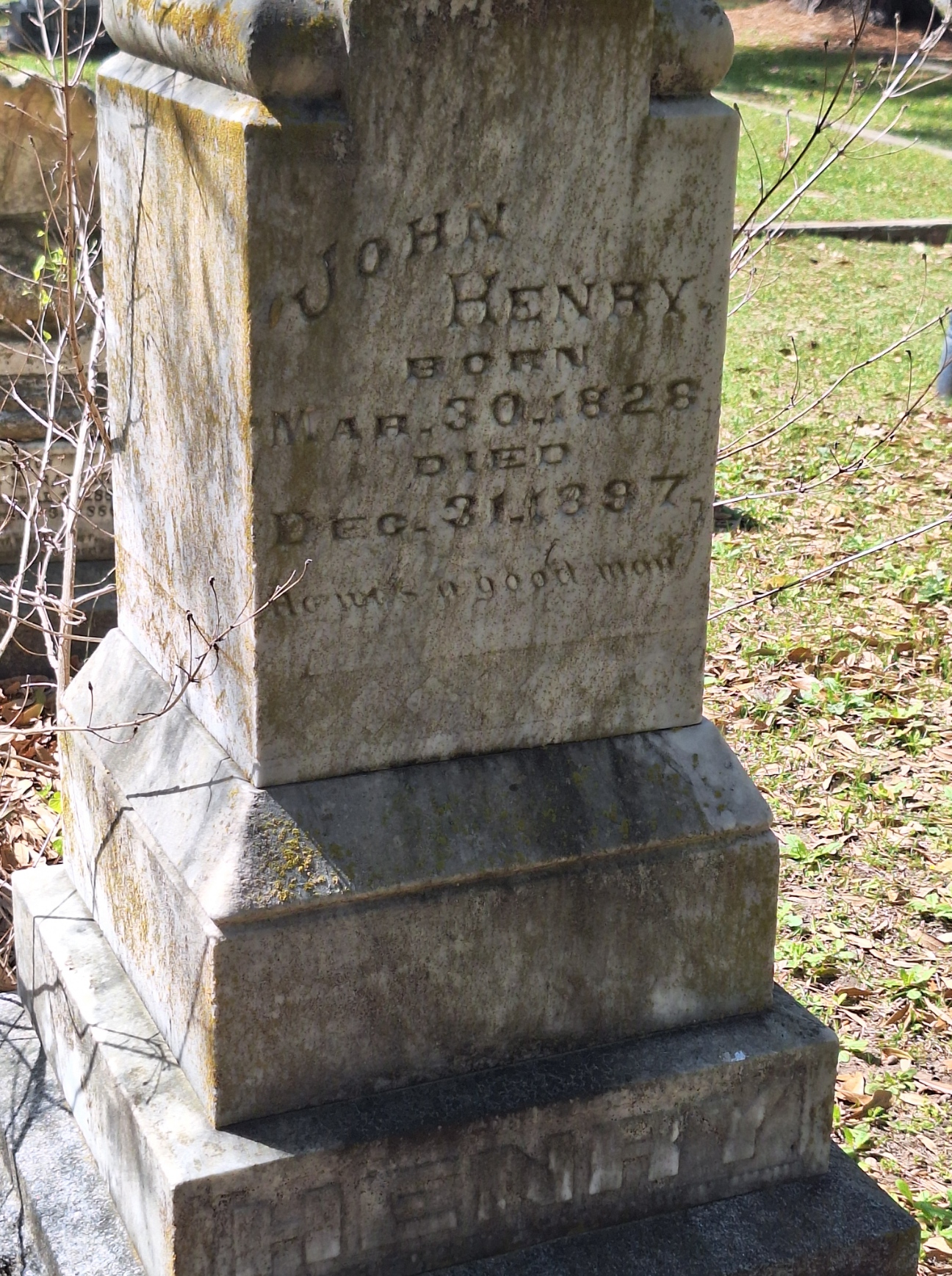
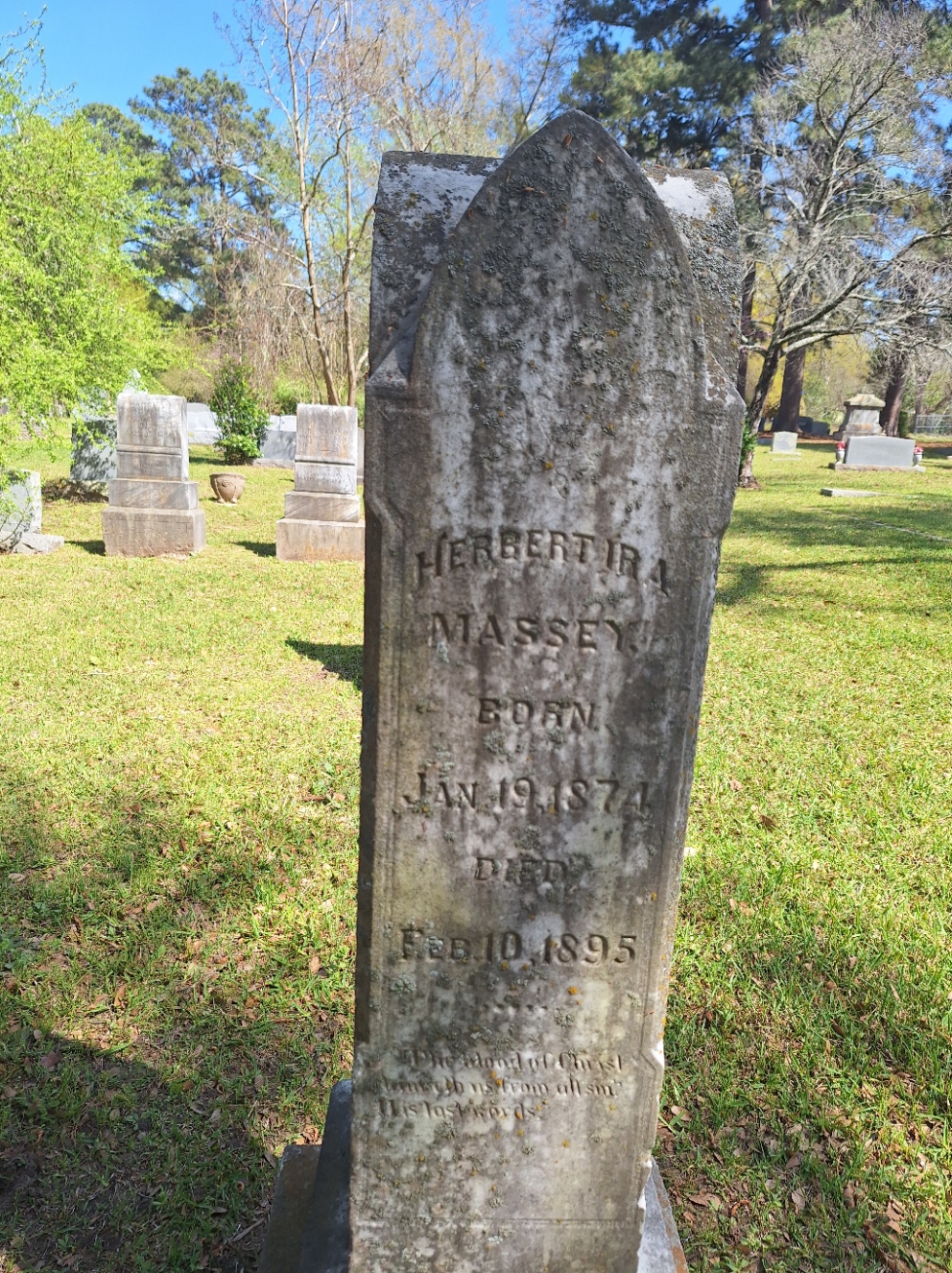
As you can see, they were spread over a large area. There were also some rather old graves dating back to the early 1800s. This first photo is the grave of a male child born August 2, 1879, and died August 22, 1880. The next was one of the oldest dates of birth I found in 1828.
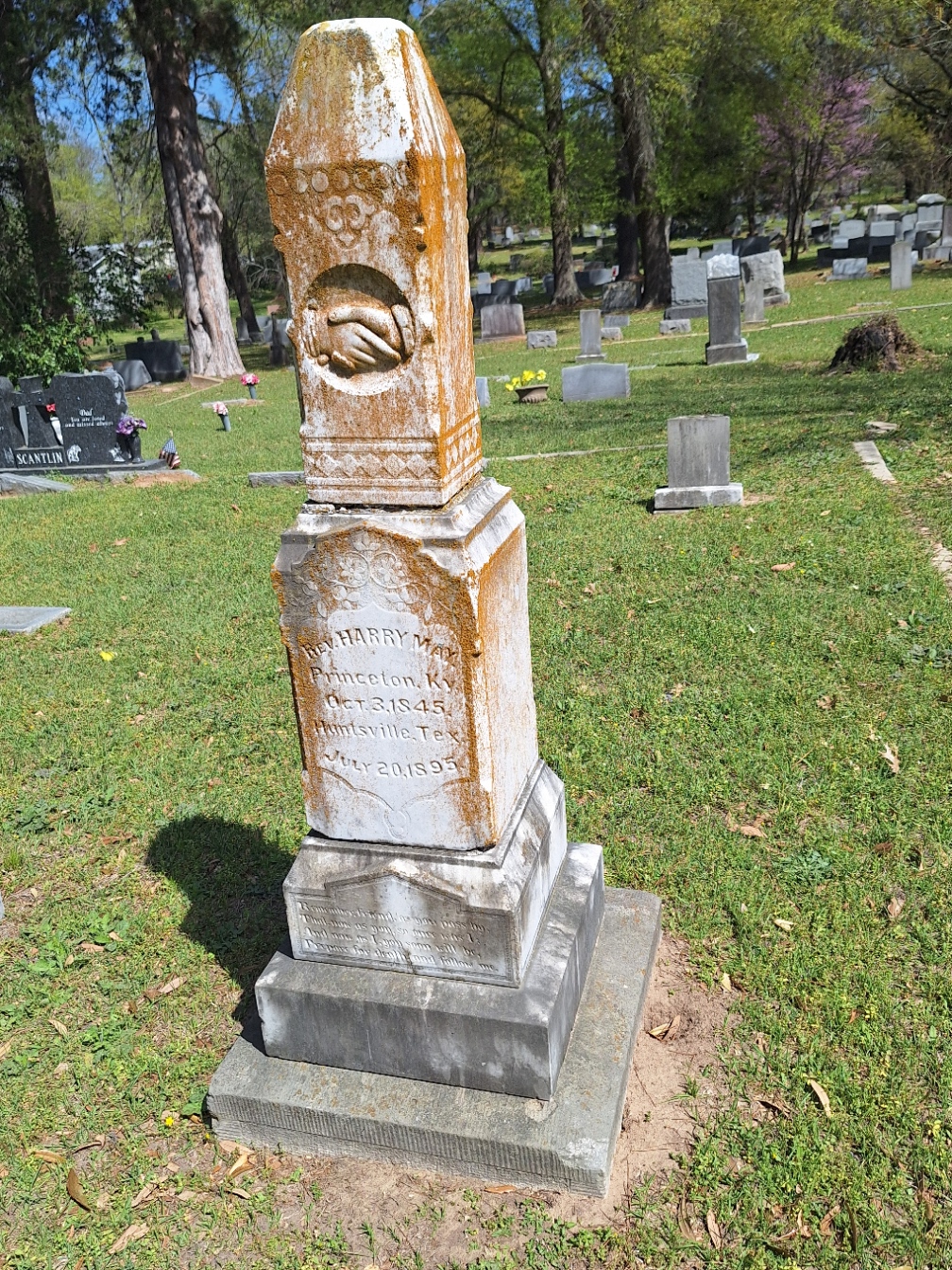
I found this one interesting, too. The symbol of the joined hands indicates a connection between spouses regardless of religion, family alliances, and even death:
A closer look at the inscription:
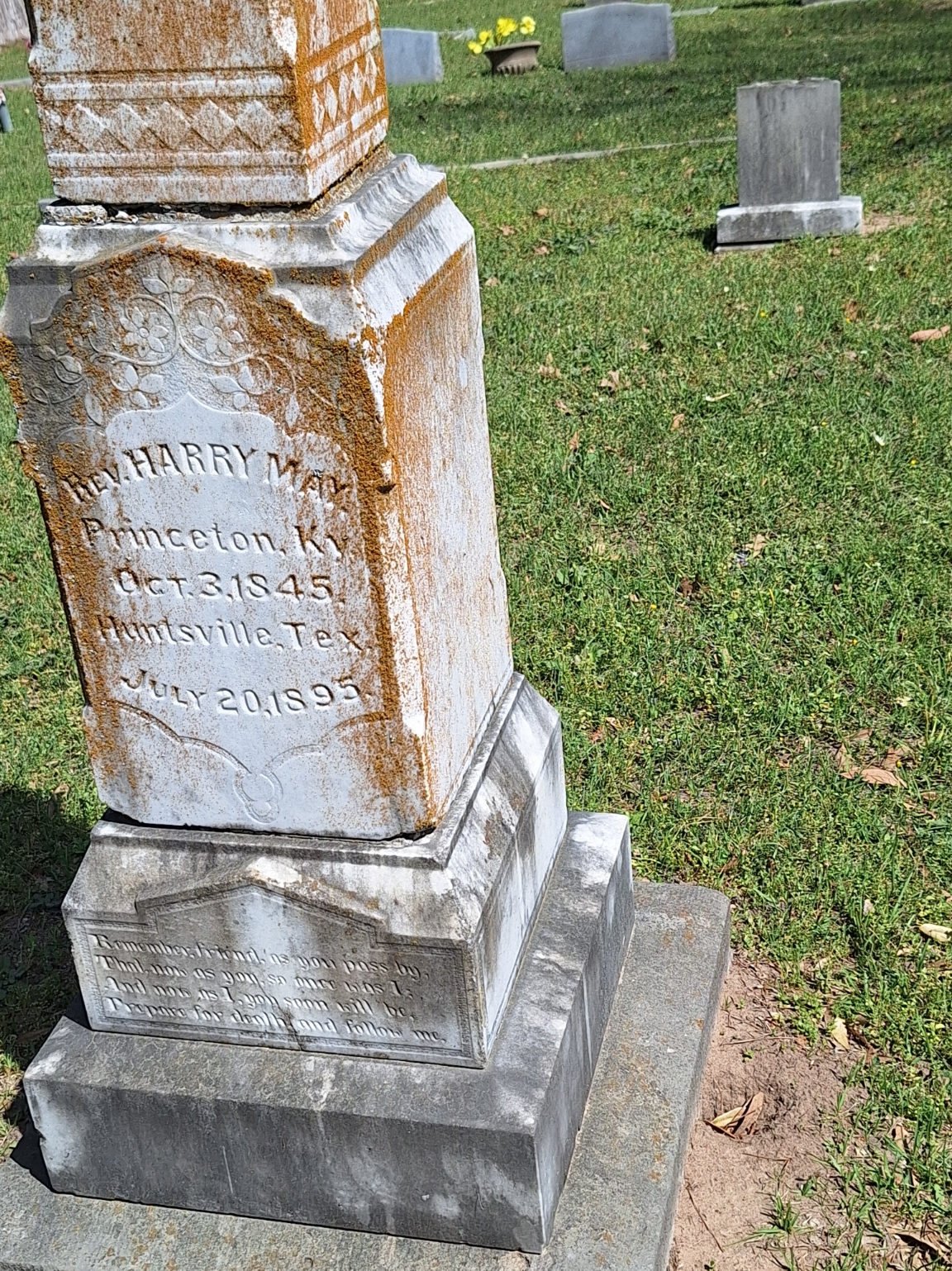
I believe the other side gave the name of his wife, but at the time, I didn’t realize it, so I neglected to take a photo.
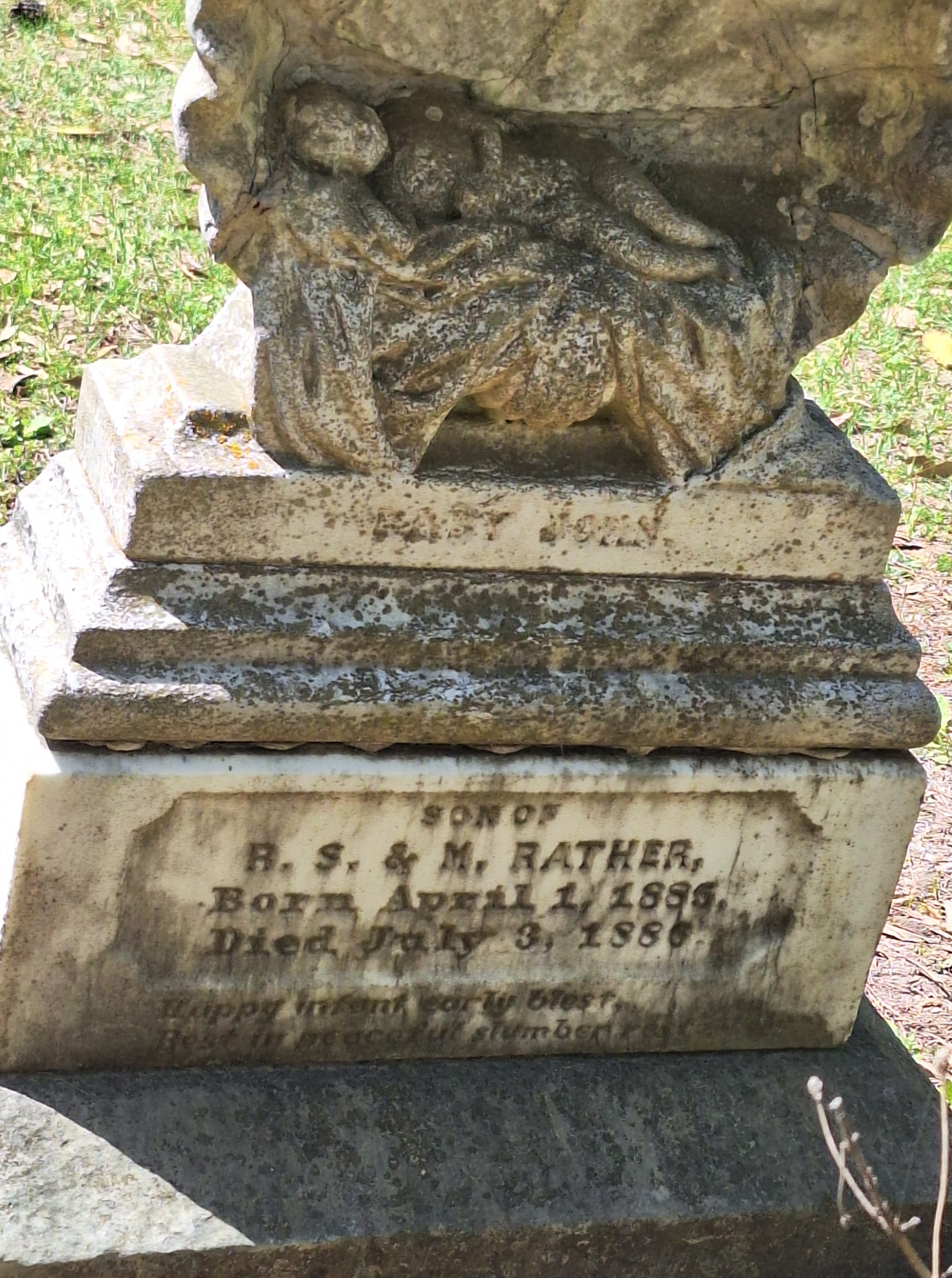
The next grave was for a child, indicated first by the infant statue. Reading the inscription, this little boy was one year and three months old. Infant mortality rates were very high at this time in history. Mothers often passed from infections, too.
Another grave also shows the short lives many people lived during that time. This young woman had just turned twenty-one.
Finally, there is a legend that this statue, initially in bronze but turned black by the weather, changes the directions of its hands at night. I know this to be the Christus and do not believe it changes, but we didn’t return at night to investigate.
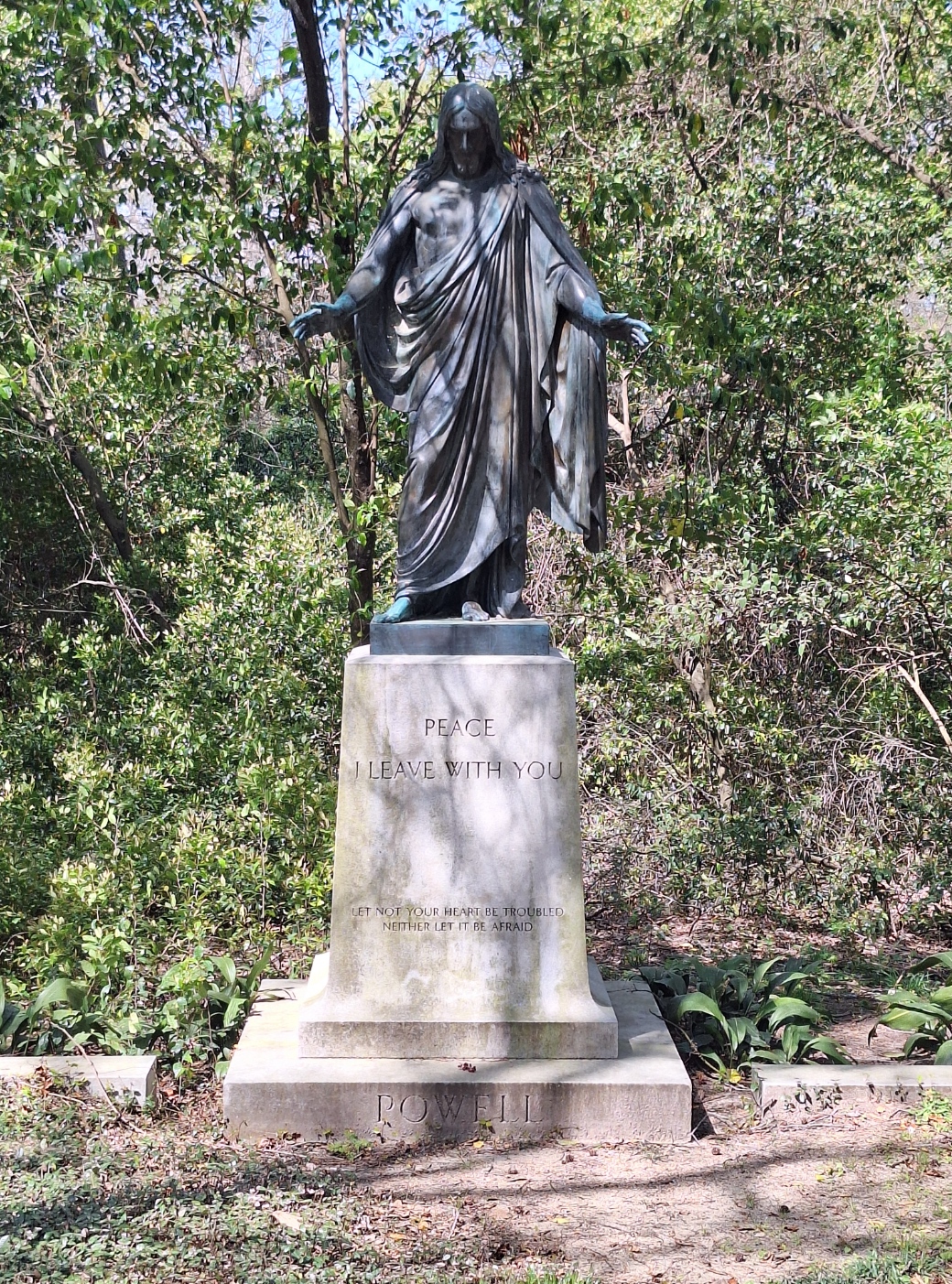
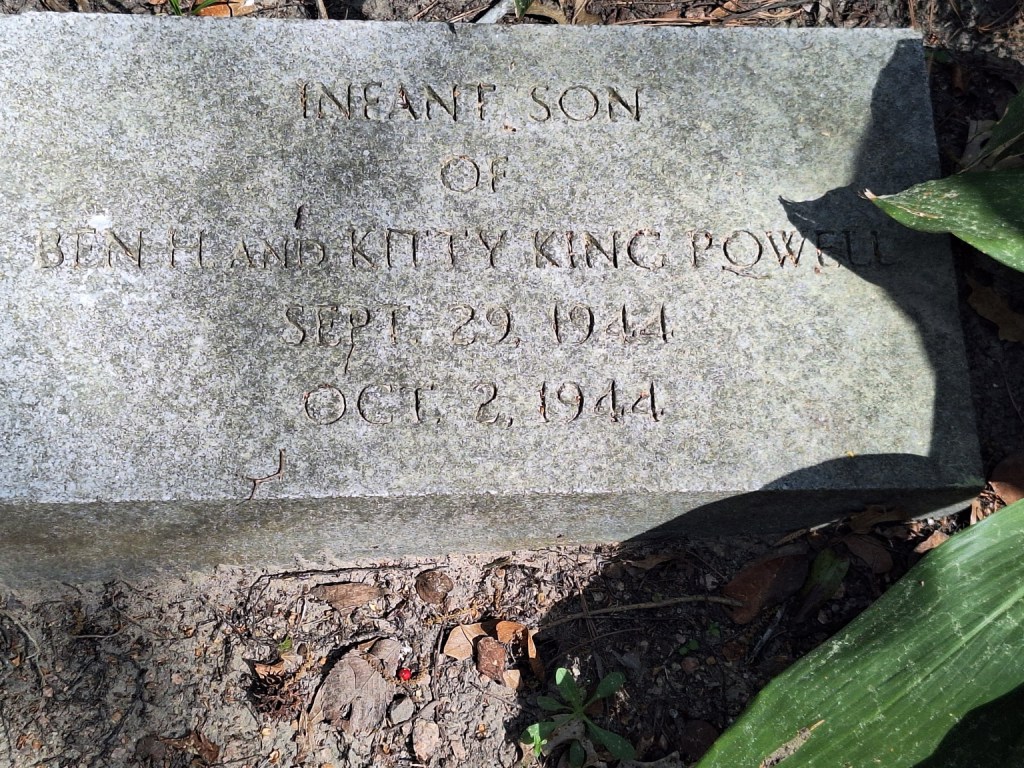
It resides in the area of the Powell family plot, blocked out by cement edging, and includes the grave of an infant:
So much history, some of it sad, some heartwarming, but history of the people who helped forge Texas into the state it is today.
Next up: I think I’ll keep you guessing…
 On Hummingbirds Wings