
First, Dear Readers, I’m so sorry for the delay in posting. We’ve been on the road for what seems like a month! It was actually only five days, but with two dogs and two oldies, it was a rough trip. And a complete switch from our plans. We had to hurry back to Utah so I could have some preventive surgery on my right foot. The third and fourth toes are turning a LOT since I lost the second toe on that foot, so this will prevent the same horror from happening. Ugh, my feet!
In addition, I had a deadline for a story that needed to be sorted out regarding its ending. That is for the Journeys V anthology, published by Elaine Marie Carnegie-Pagett of Stone Pony Publishing, which I also edited. I had to put my story off until I completed all the edits for the other stories and could wrap up my own. And I needed to submit a poem to an every-other-month anthology for my United Kingdom publisher, Grant Hudson of Clarendon House Publications. I’ve actually submitted to all but two of the poetry anthologies – the first one I missed because I hadn’t started publishing poetry yet, and the ninth one because it fell around Christmas time and I simply missed the deadline. I’ve also published in other anthologies with him. And other publishers.
Now, let me share this awesome historical site we visited in Savannah, Georgia. Wormsloe was settled by Noble Jones in 1733. The property is still owned by the same family (the eighth generation today), though through marriage, the current family name is different. Noble was also key in the settlement of the colony on the Isle of Hope, where Wormsloe is located.
Although this main gate is closed to the public, it was the original entrance. The architecture is gorgeous:
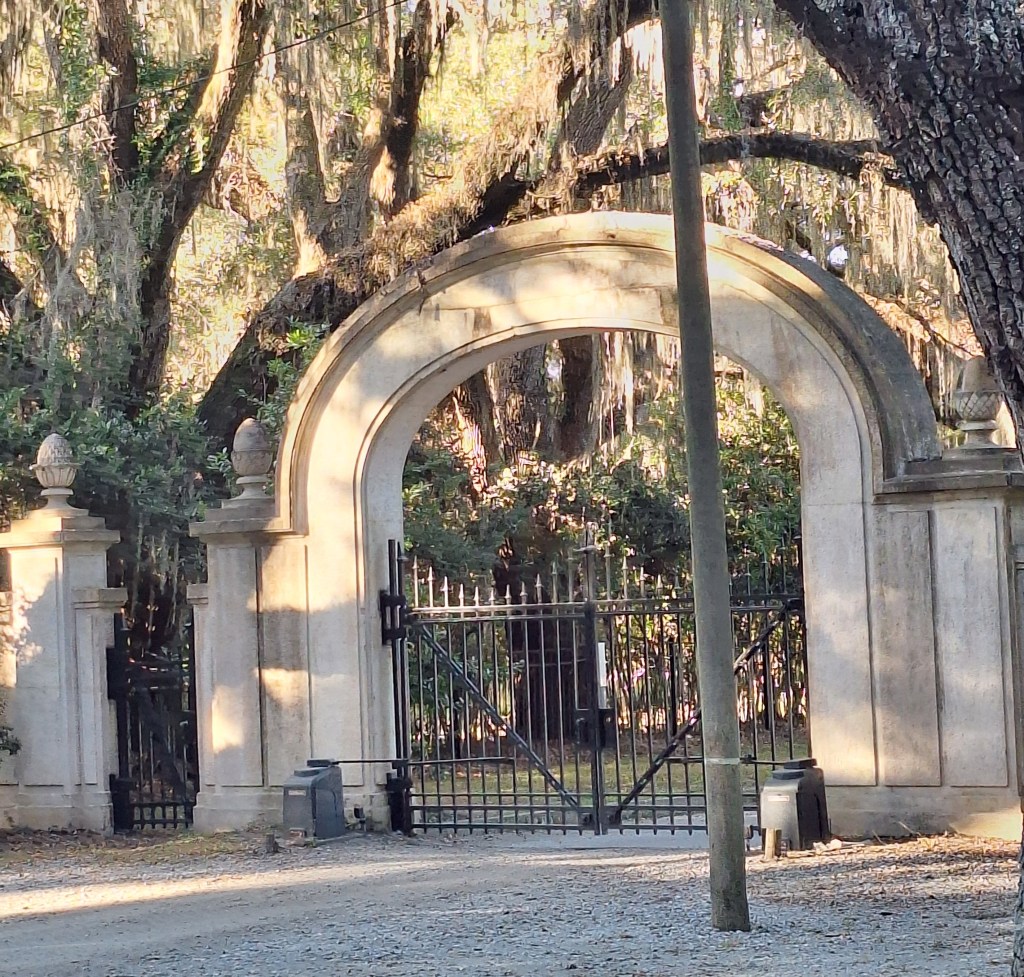
And naturally forming is the archway over the lane onto the site:

As you take the ride down the lane, you’re provided with historical information. For one, farming is not very successful here because of the sandy soil. The owners attempted to grow many different crops, mostly without good results. Though one of our tour guides told us there were never slaves working this property, the information in their own flyer admits they did. Almost all southern plantations did. Over 1,500 slaves labored on this land and other holdings belonging to the Noble Jones family. Of course, it was common at this time in the South.
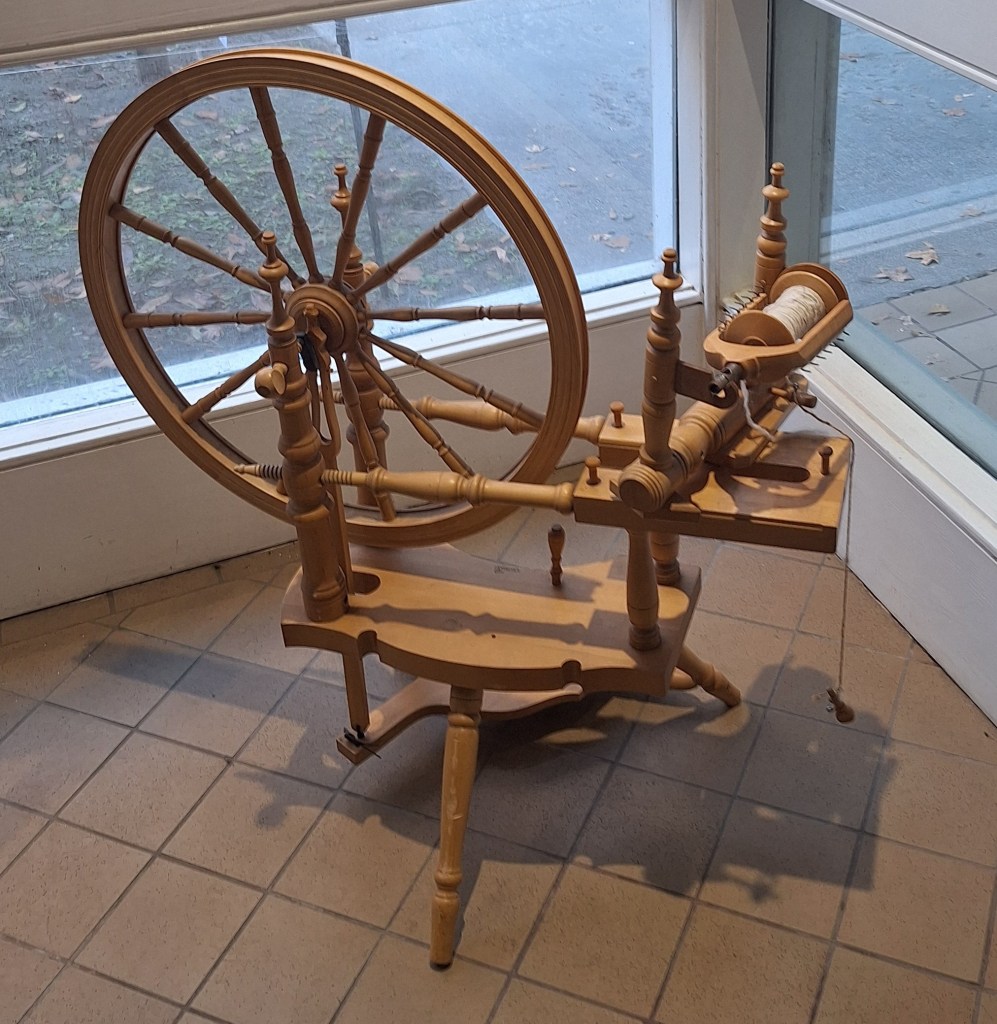
At the end of the pathway was a museum that we toured. Some items were replicas, and some were dug from archeological sites on the property. A replica spinning wheel:
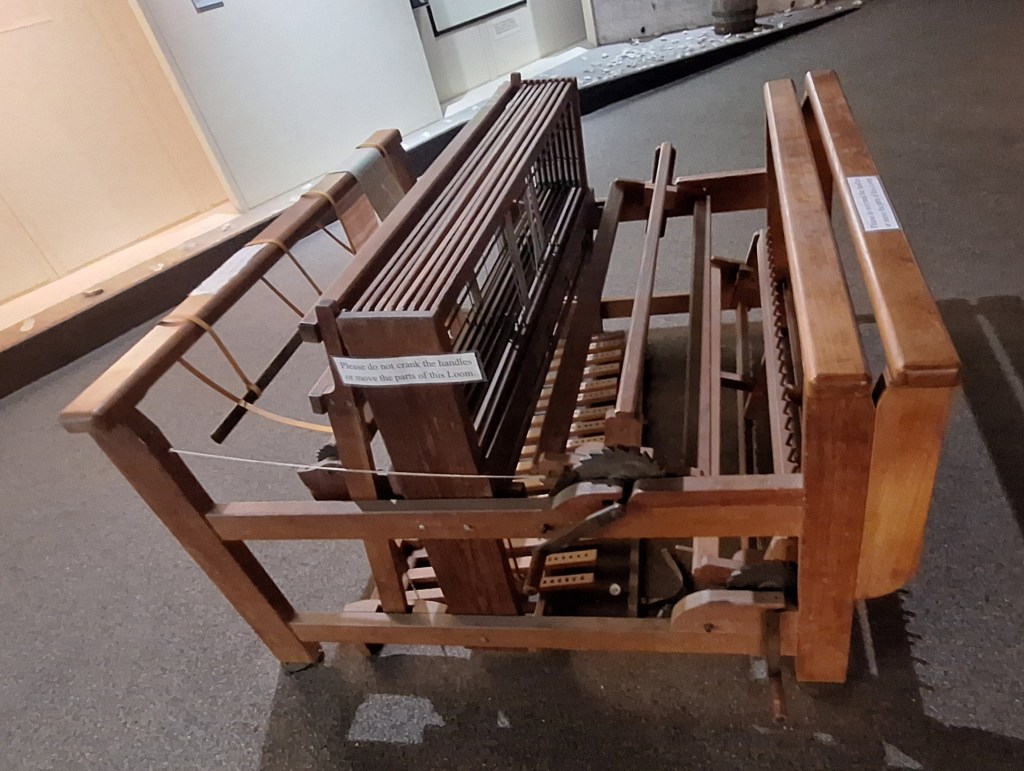
A handmade weaving loom:

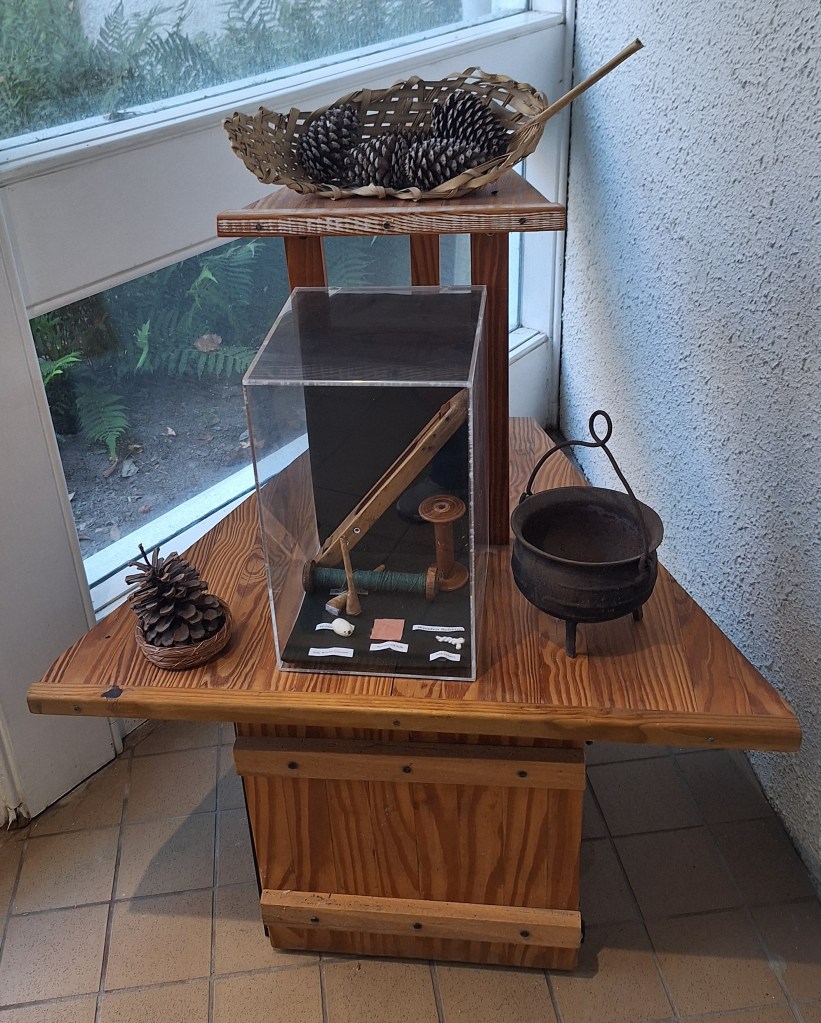
Some actual pieces from the site:
And an actual old weaving loom:
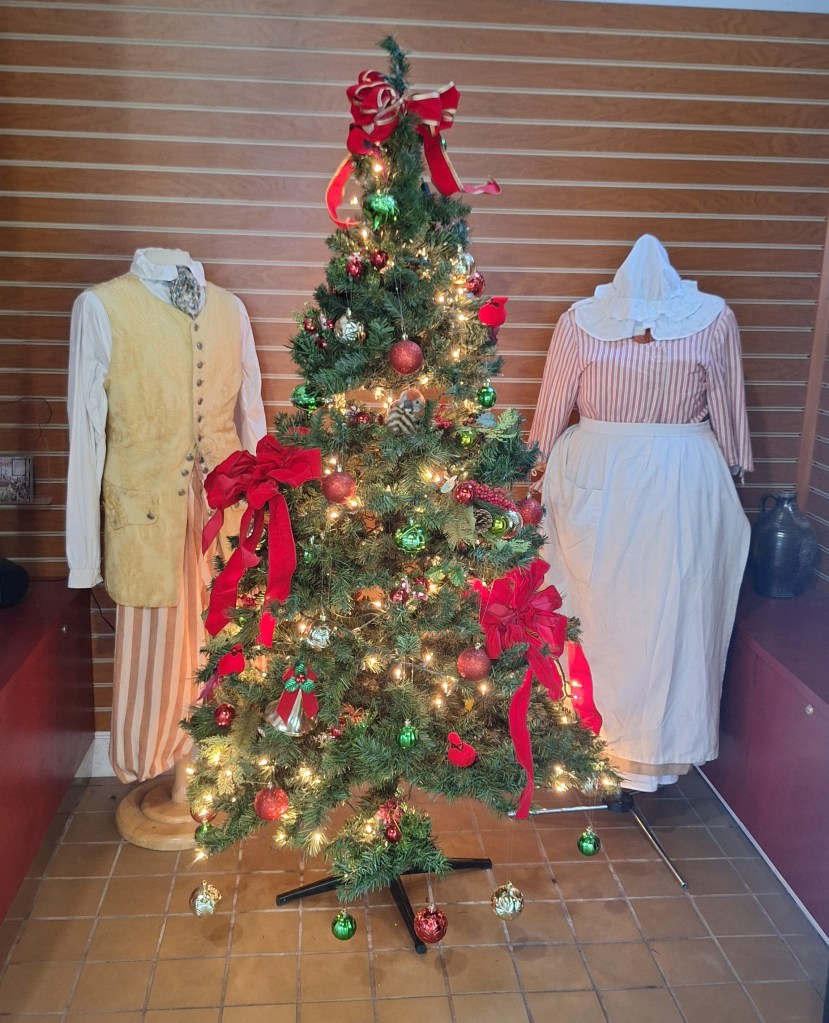
Common clothing at the time:
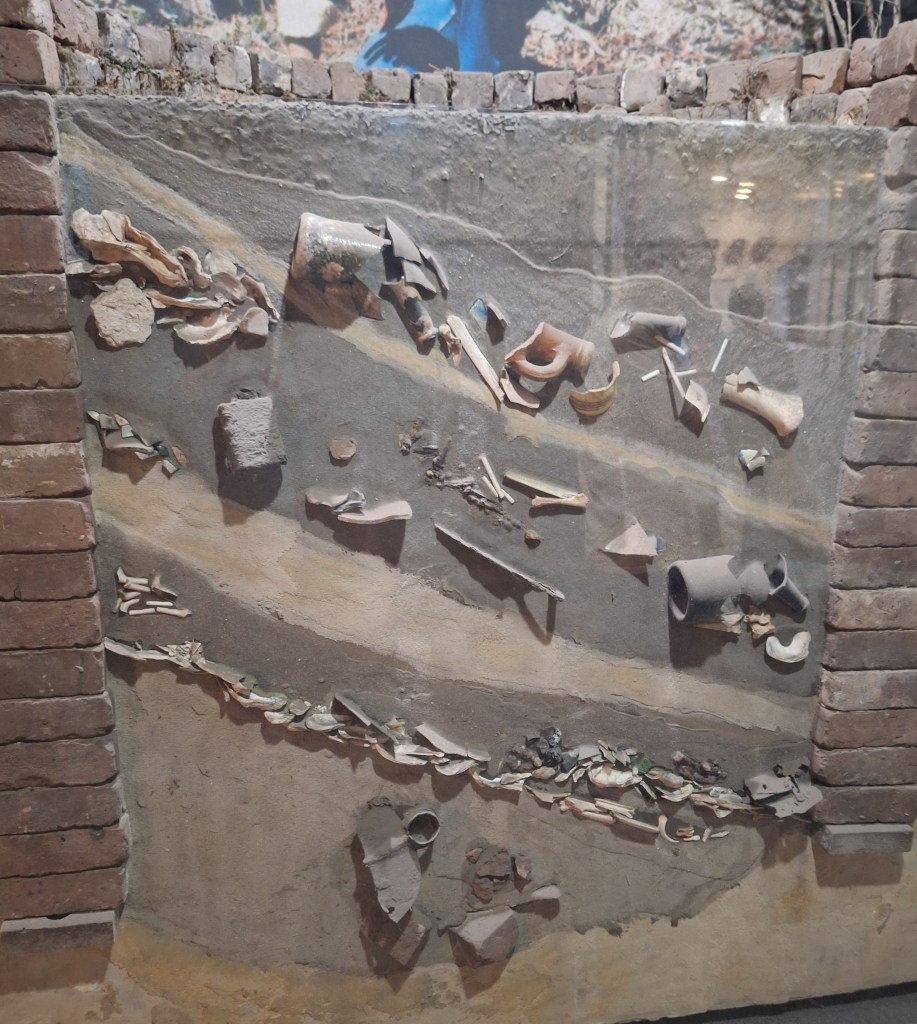
Once the well on the property failed, it was used for trash, and the archeologists were able to gather some amazing relics. This is what it would have looked like in the well:
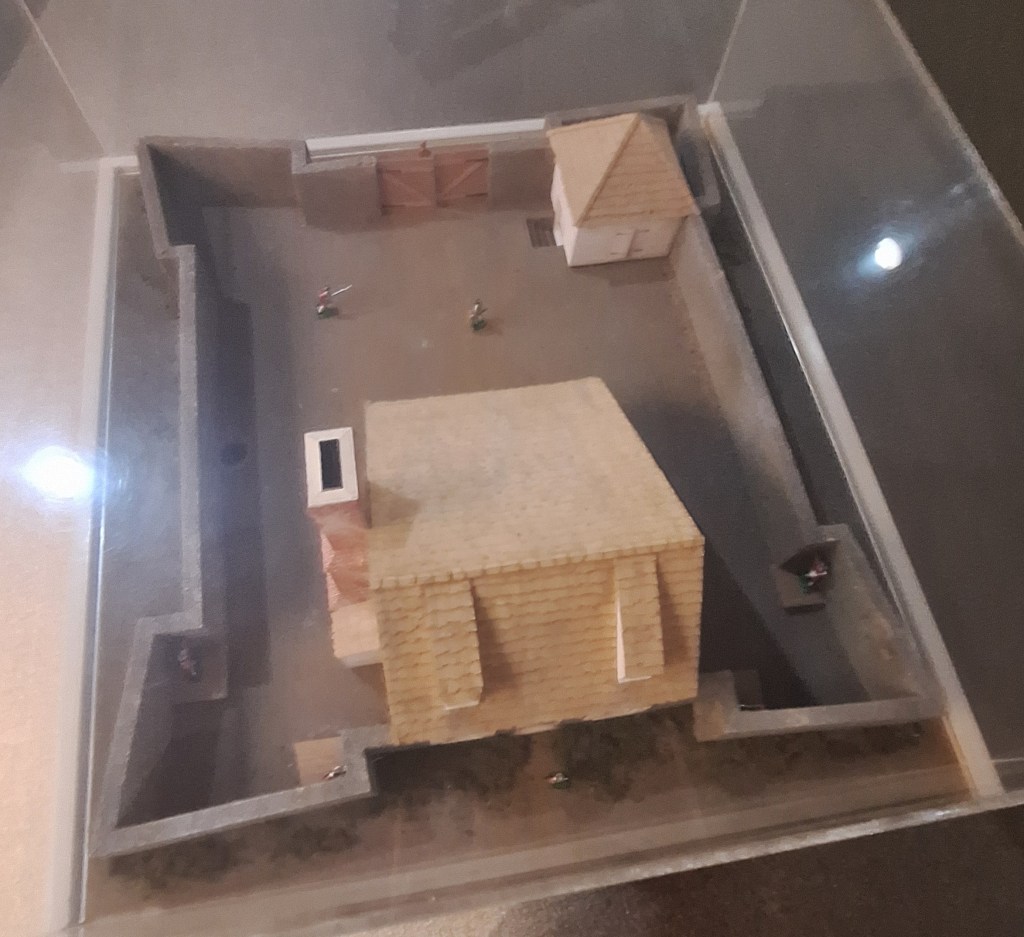
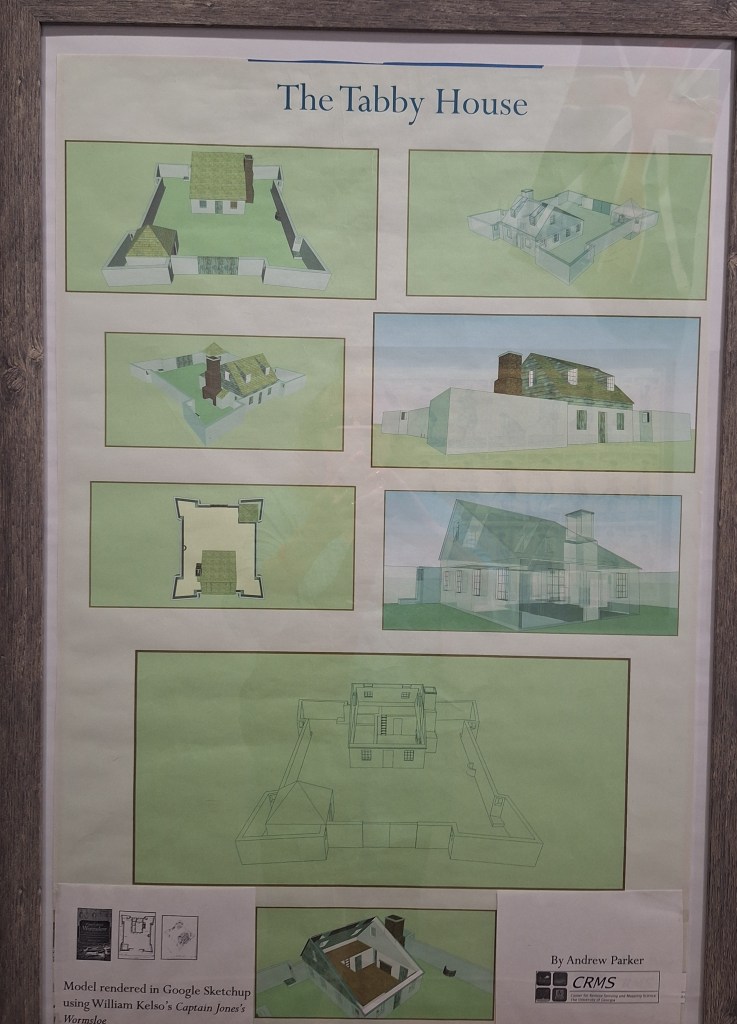
Noble Jones built a Tabby House. Tabby is composed of sand, oyster shells, lime, and water. The mixture is stronger than what other homes at the time were being built from – wattle and daub – and so it was used as a fort when the Spanish-American War took place and survived.
Here is a model of the original Tabby House:

View from above of the fort:
Back of the fort:

Rendered plans for the fort:
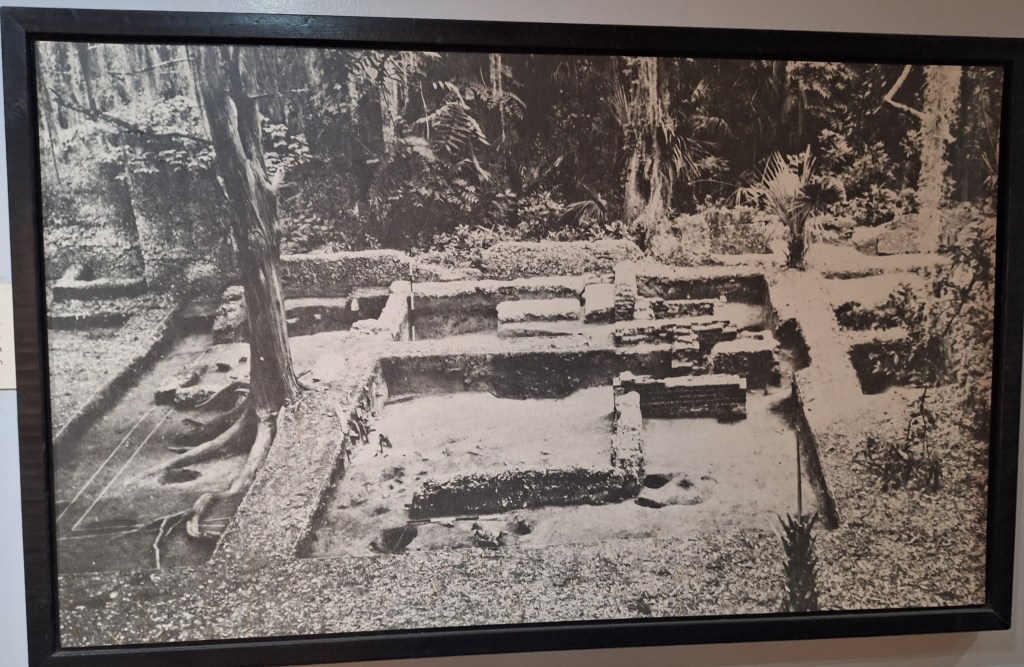
And the ruins:
Interestingly, here are the noted Spanish Settlements at the time this colony was created:

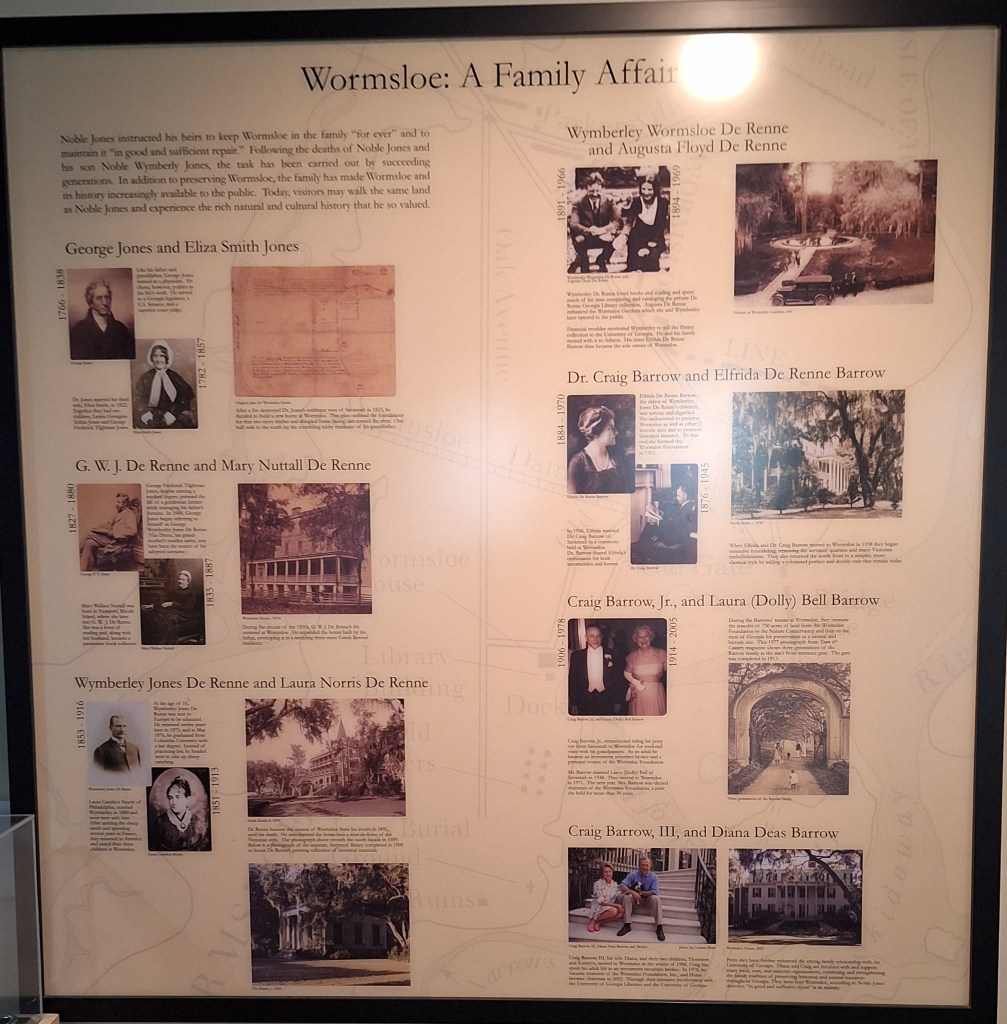
And finally, the family. Note the French name change, a common practice in the area at the time:
Next Up: Our Final Savannah, Georgia Stop – Bonaventure Cemetery
 On Hummingbirds Wings
thanks for sharing
LikeLiked by 1 person
Thank you for reading!
LikeLike