
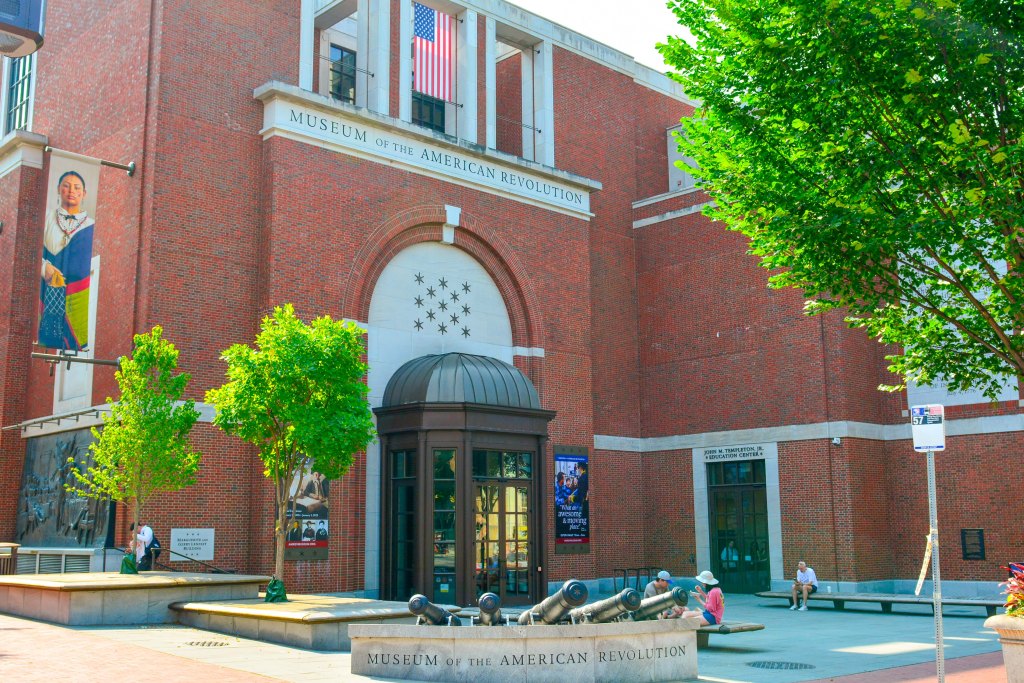
Our next stop on the Philly trip was to the Museum of the American Revolution. This is the front of the building and a stock photo because mine didn’t come out very well:
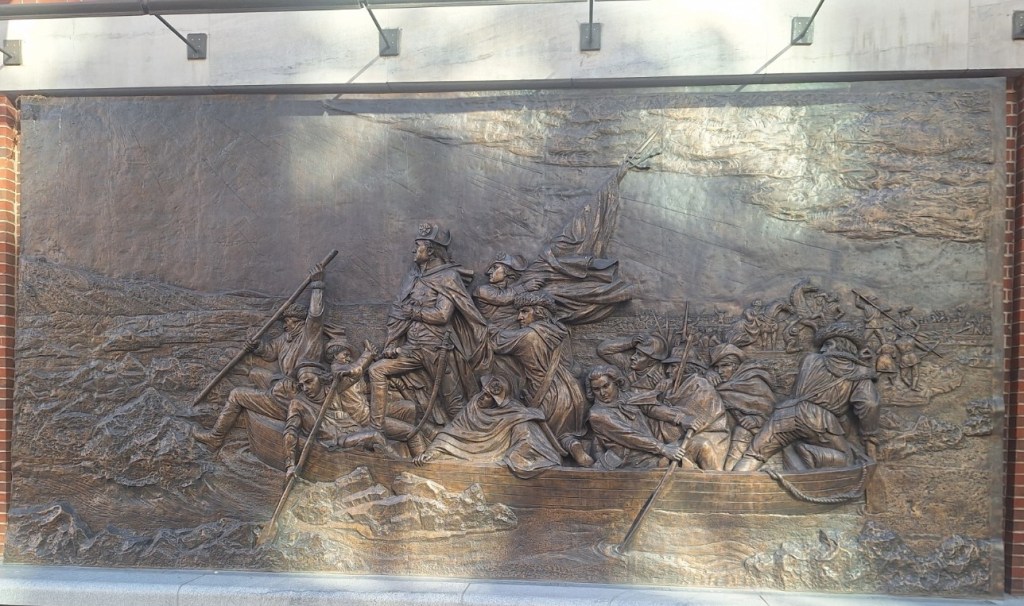
On the left side of the building, there were two bronze plates. This one was the meeting to sign the Declaration of Independence:

And this one is of General George Washington, our first president, crossing the river:
The museum is large, so after visiting the Betsy Ross House, walking around the area to admire some architecture, and exploring the vicinity of the Rocky Balboa statue, we were getting pretty tired. We didn’t see everything in this amazing museum.
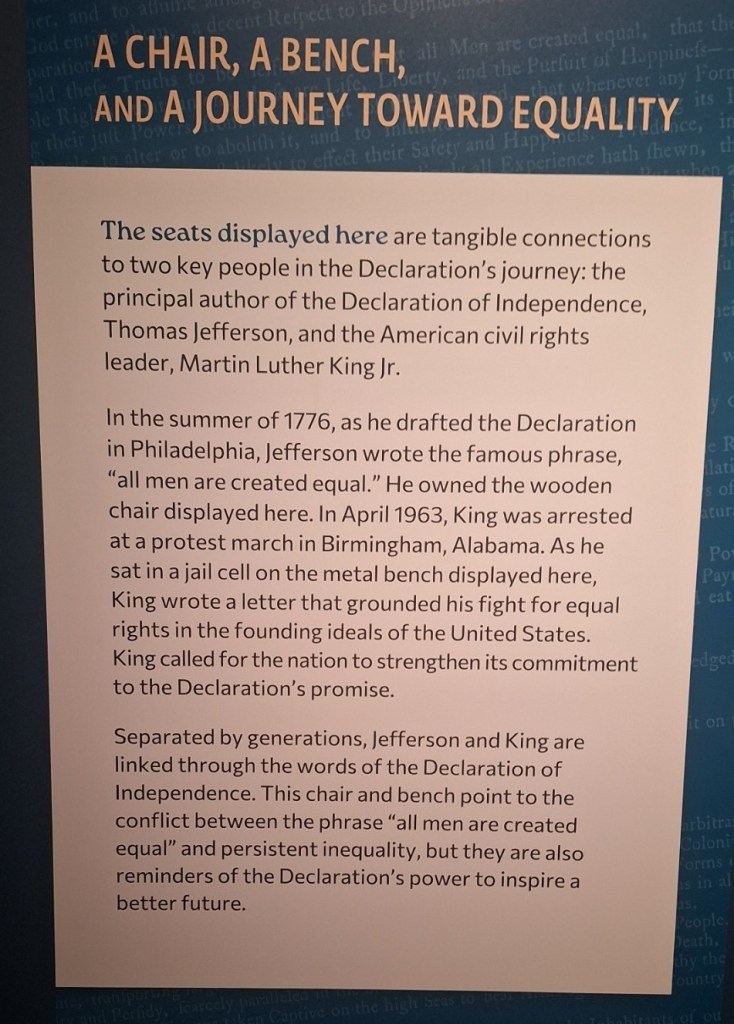
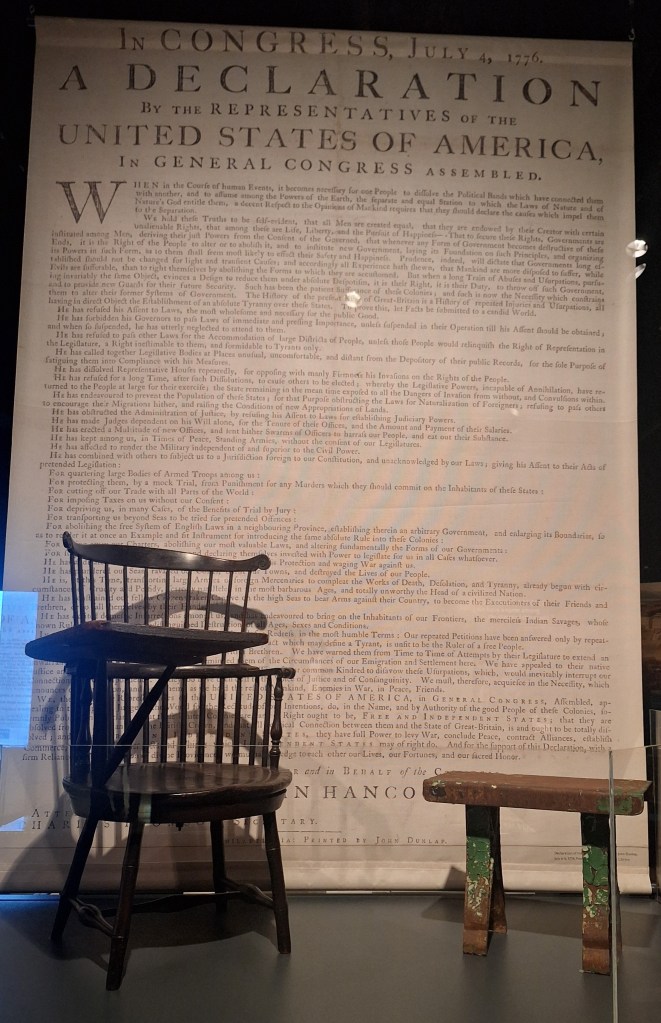
This sign explains the chair and bench in their special exhibit, “The Declarations Journey,” as you enter the area. This is the display photo below it. The chair was Thomas Jefferson’s, and the bench was where Martin Luther King, Jr. sat while in jail.
The display:
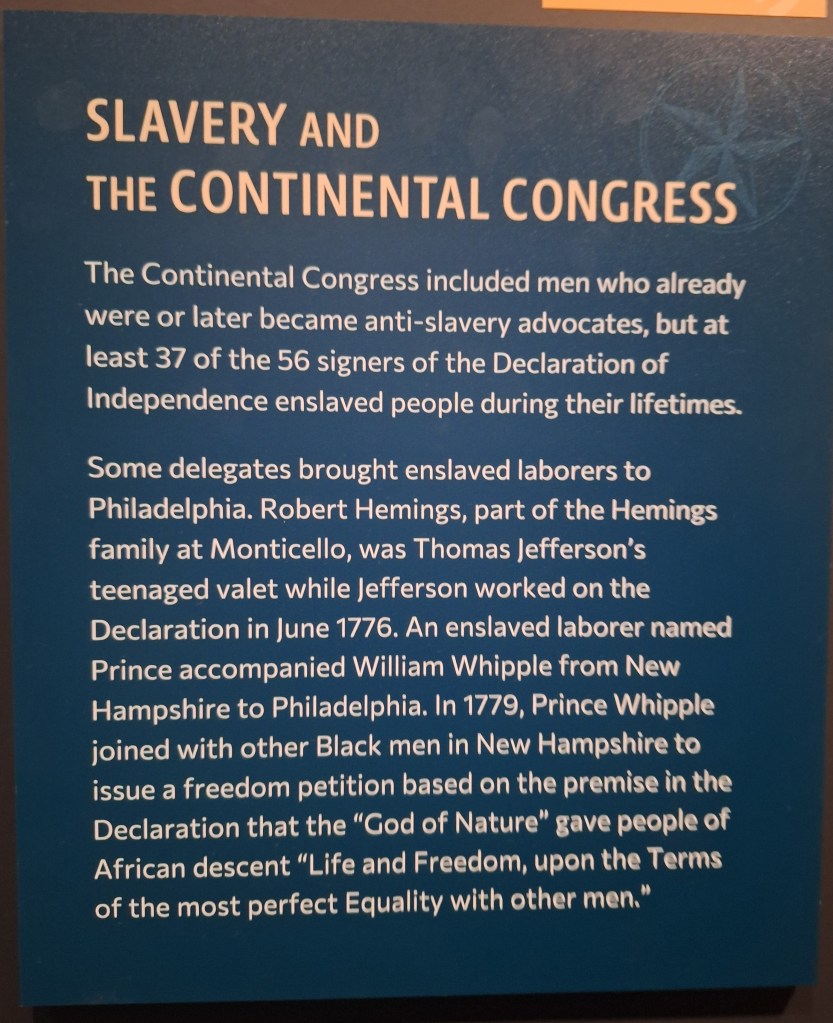
One of the lines that I think resonates with all Americans is, “All men are created equal.” And yet, at the writing of the Constitution, slavery of Africans still existed in the colonies/United States. Some of the signers were even slave owners themselves:
Of course, today, we find slavery horrific and disgusting.
I’ve been writing a novel for what seems like forever, based on a black man whose younger brother is kidnapped. To be factual, since the story begins in the early days of the Colonies, I had to deep dive into the true history of blacks and slavery. I read documents that are in rare archives to ensure I had the facts. I learned things that I had never heard in school. I’ve always wished they taught the truth to us all about the African slaves. For example, Africa practiced slavery for centuries in their own country, long before Europeans arrived in the Americas.
Before that, in the original colony of Jamestown, slavery of any color, both black and white, was based on indentured servitude. Usually, for passage to the Americas paid for by the “owner.” This was an agreement between the “owner” and the “indentured servant” that the latter would work for their “owner” until a previously agreed-upon contract came to an end and the “owner” was repaid for their costs.
In Jamestown, the two wealthiest colonists were black men. And black and white men and women were intermarried as a common occurrence. A black man, Anthony Johnson, had an indentured servant, also black, named John Casor. They were disputing when John’s contract actually expired. Anthony took him to court, requesting that he be allowed to make John a permanent slave, and the court agreed! Can you believe that? So began lifetime slavery in the Americas. A tragic and horrible decision that placed a pox of shame on our country.
Schoolchildren should be taught these facts. Black children should learn that they are the descendants of kings and queens in Africa, and not of slaves. They should be taught to be proud of their great heritage. Unfortunately, too many prefer to make them feel less than, rather than to build them up.
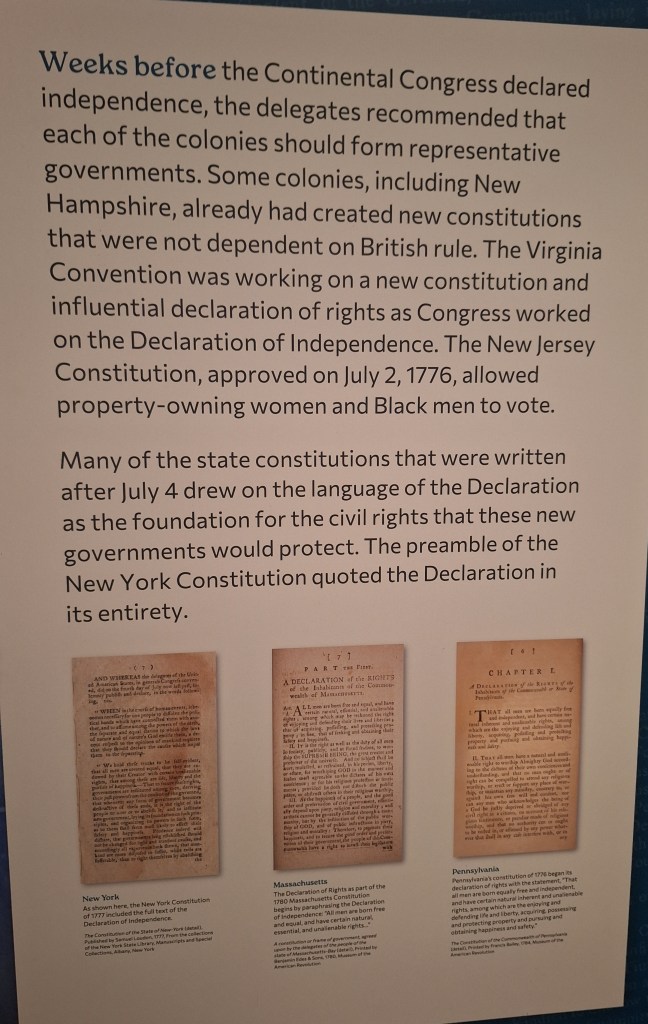
This museum actually looked at these issues, which I appreciated. Read this sign and note that New Jersey gave the vote to both property-owning women and Black men!
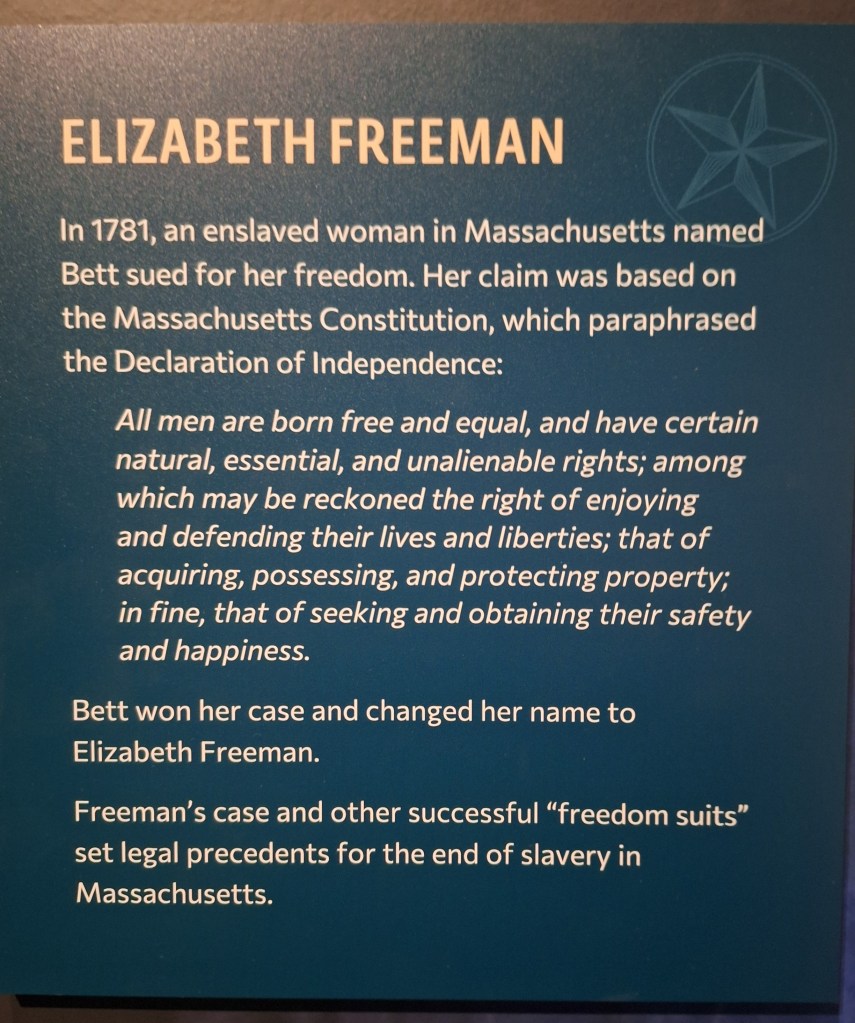
Black Americans responded to the Declaration, understanding there were powerful words in “All men are created equal.” In fact, Elizabeth Freeman sued for her freedom and won based on the Massachusetts Declaration that mimicked words in the original:
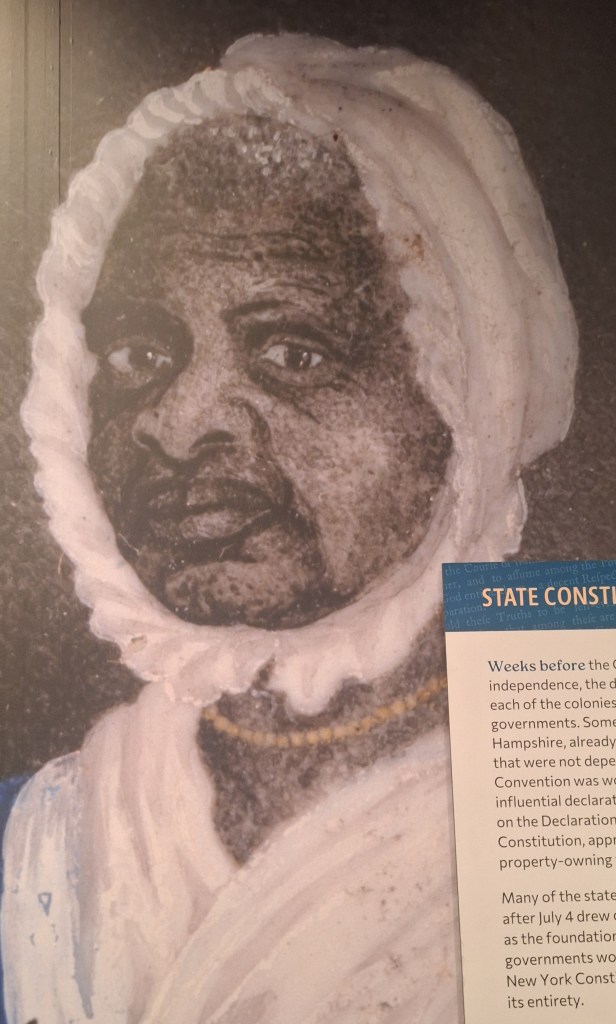
This is a drawing of her:
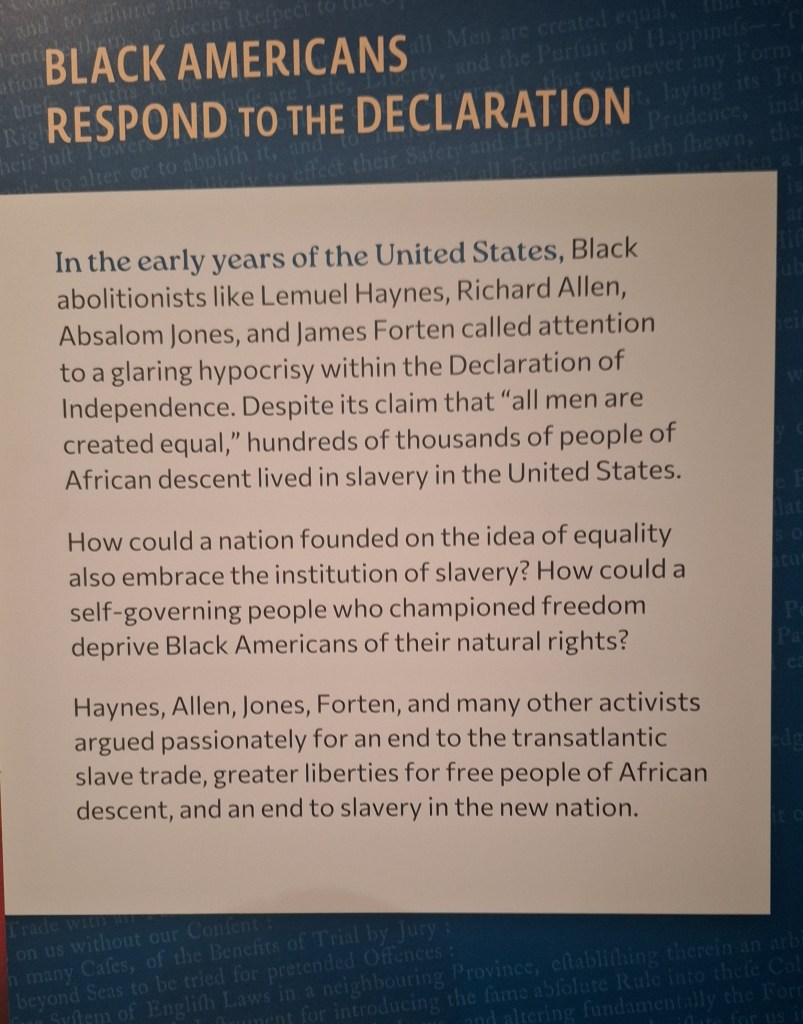
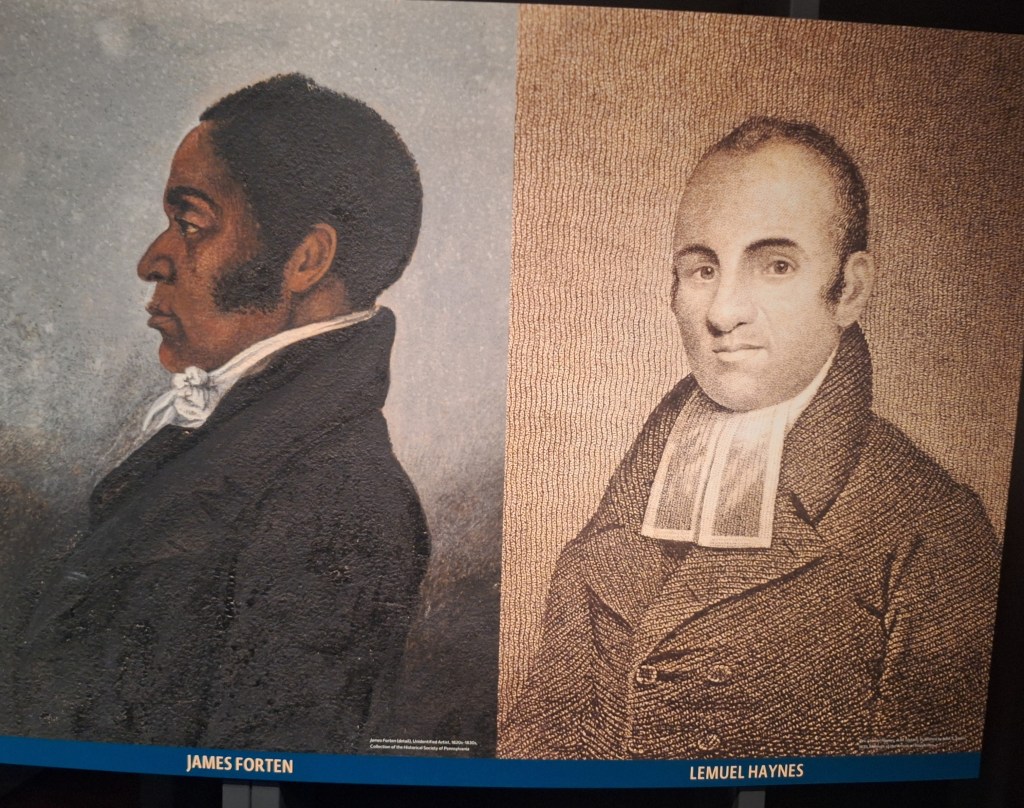
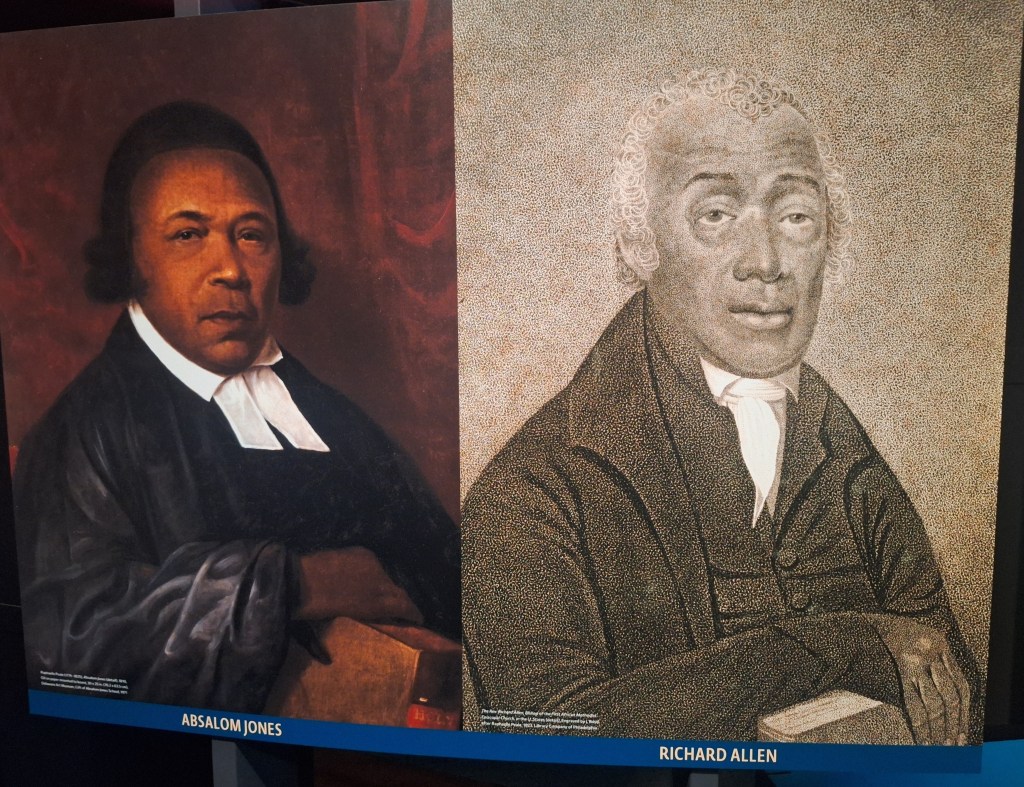
Black leaders/abolitionists also spoke out:
Lemuel Haynes and James Forten:
And Absalom Jones and Richard Allen:
The fight for the freedom of black slaves had begun based on the words of our Founding Fathers, specifically Thomas Jefferson.
When word finally reached Europe, the King was furious, and the decision to continue the war was made.
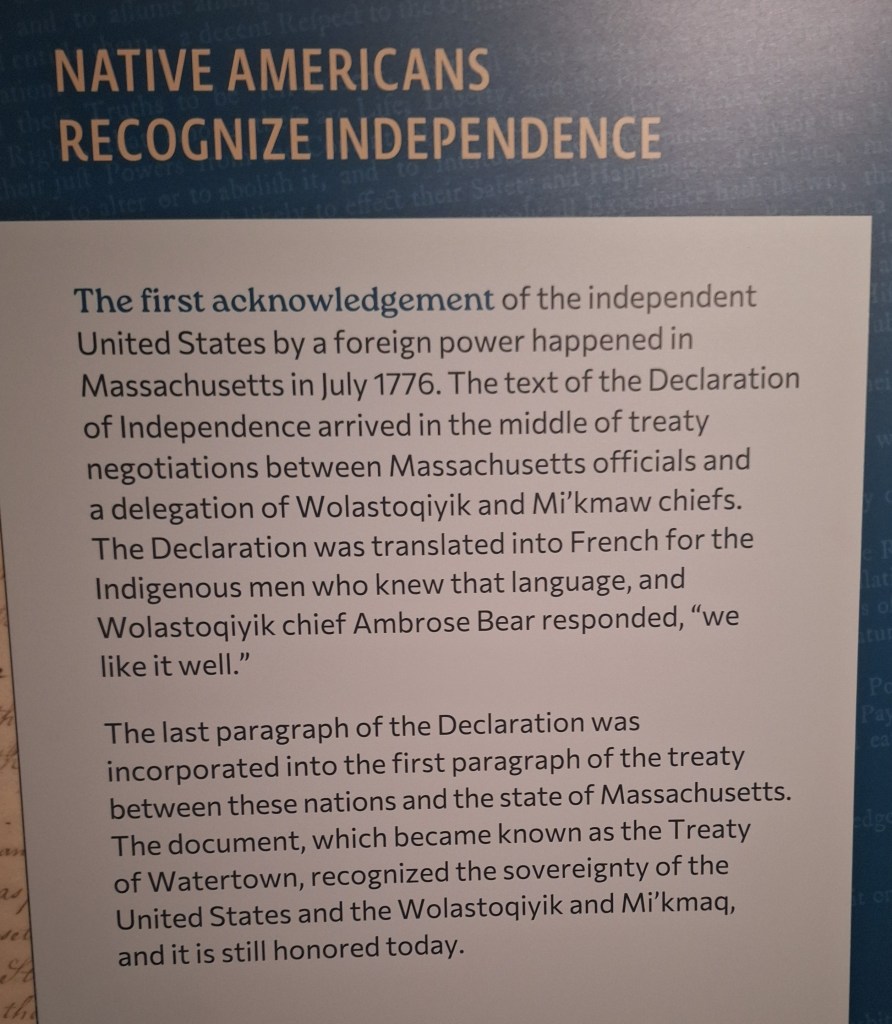
During the meeting about the treaty between Massachusetts and two Native American tribes, a copy of the Declaration of Independence arrived and was read (in French, the language the Chiefs understood) to them. They liked it, and the last paragraph of the Declaration was incorporated into the first paragraph of the treaty, recognizing the sovereignty of the United States and the two Tribes:
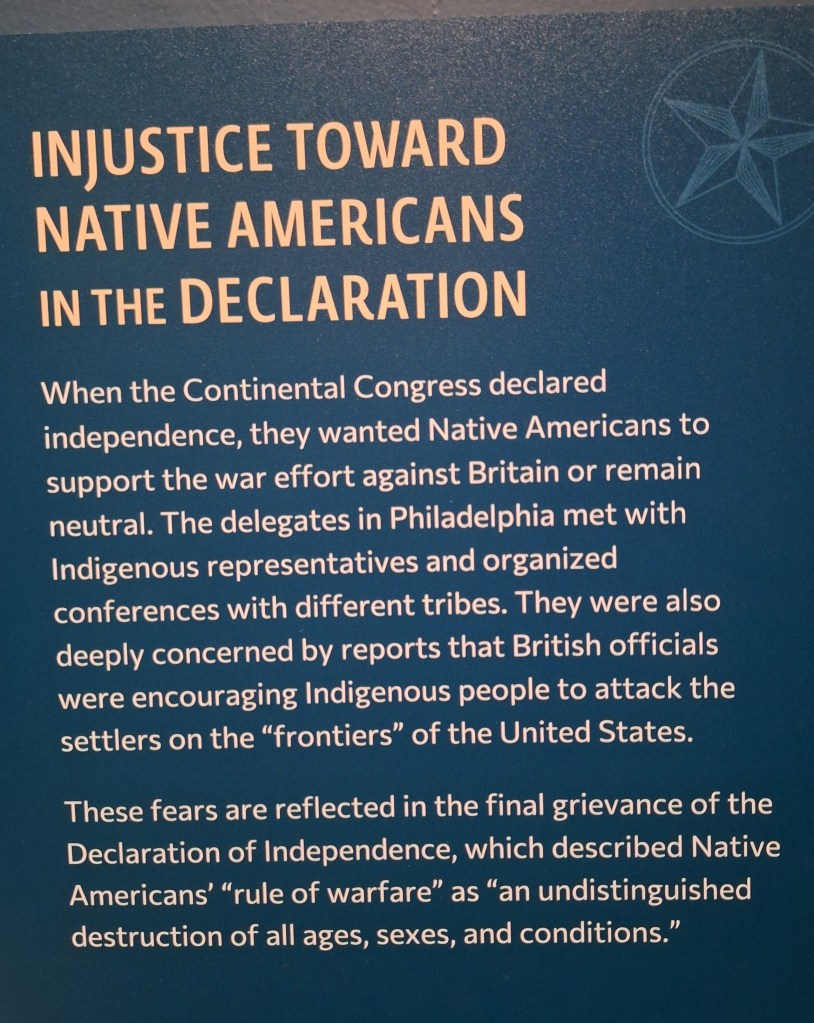
Of course, the Continental Congress wanted the Native Americans to support the war against Britain or stay neutral. They also knew the British had been suggesting they attack the settlers. Unfortunately, the fears of Congress were added in the final grievance of the Declaration by describing Native Americans’ “rule of warfare” as “an undistinguished destruction of all ages, sexes, and conditions.”:
Sadly, we all know how these concerns turned out for Native Americans and added yet another shameful event to our nation.
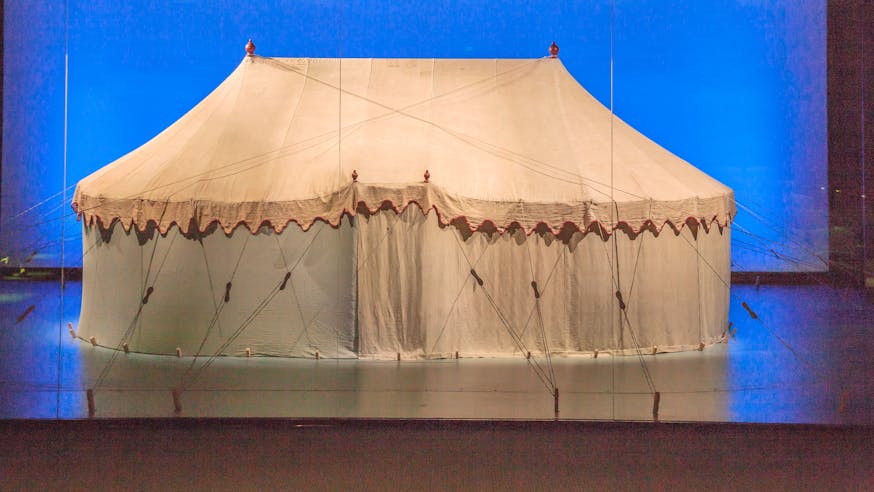
Finally, though there is so much more I could share, there was a small film about the war and George Washington. At the end, a curtain opens and the REAL tent belonging to George Washington used during the Revolutionary War is behind it! I have to be honest, seeing this actual object caused me to choke up and brought tears to my eyes. Here is the stock photo they have available, as you’re not allowed to photograph it. It’s in a specially sealed room, and they are trying to prevent any further damage to it. THE General George Washington sat in this tent, Dear Readers! It was so incredible to see.
To wrap up this post, there is so much more to learn about in this museum (or online, such as the free class through Hillsdale College).
Next Up: Day 86 – The Final Day of the Journey
 On Hummingbirds Wings