
I’m not sure if any of these types of towns are referred to as Ghost Towns anywhere but here in the United States. A Ghost Town doesn’t necessarily have ghosts, but who knows for sure ;). They are usually towns that were abandoned after a gold or silver rush, when the treasure ran dry. And what I do know is they are filled with amazing history. In this case, Garnet Ghost Town near Clinton, Montana, has been saved by a preservation society. It was an amazing visit, especially for a history buff like me! I took plenty of photos.
On arrival, we stepped out of our truck to see this:
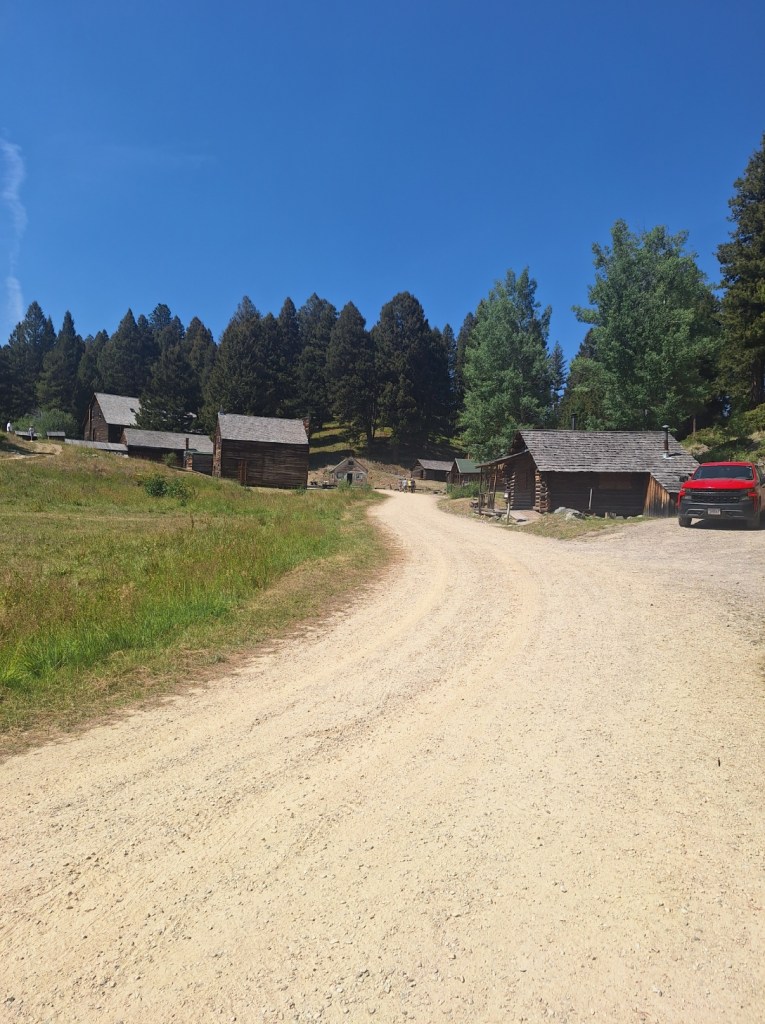
Again, you see that beautiful blue sky Montana is known for, along with the remainder of the main street of Garnet. Two cabins are currently lived in as private residences. Those are people who work in the gift store and keep everything in order. The first cabin, with a red truck parked beside it, is one of the residences.

This town was inhabited by working people until the 1930s, although it had been abandoned once before around the time of World War I. This shows what Main Street looked like before the fire that the sign tells about.
I took a photo of this wheelbarrow, which is around one hundred years old.
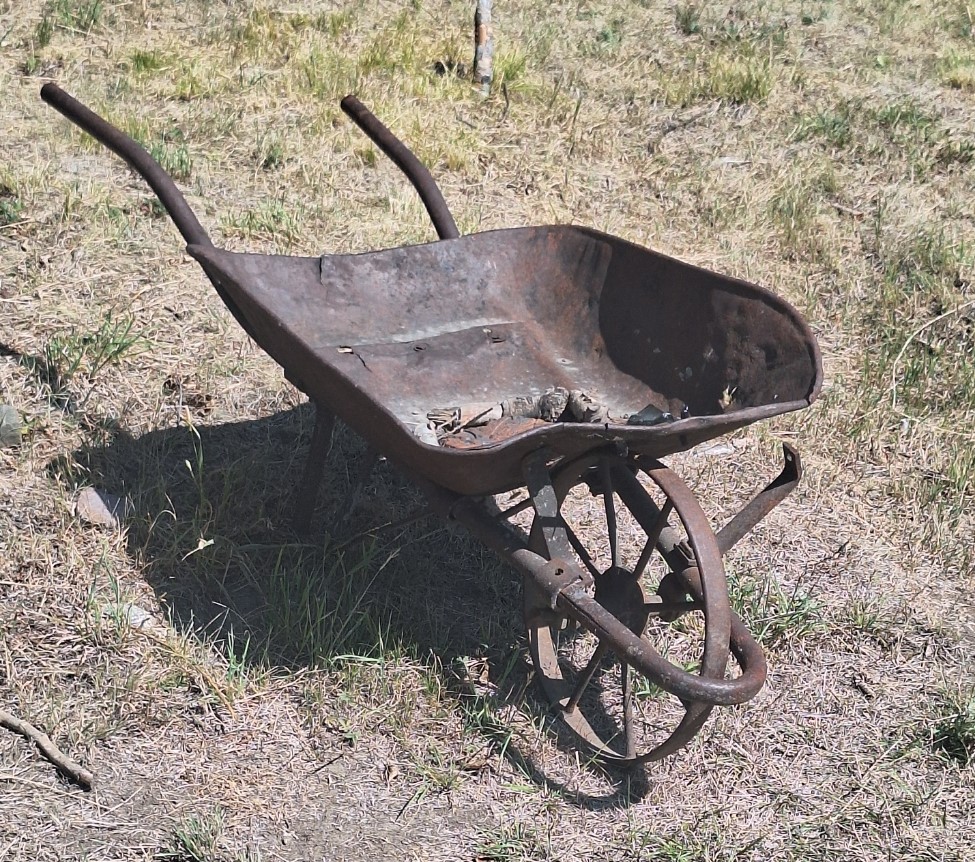
Can you guess what this is?
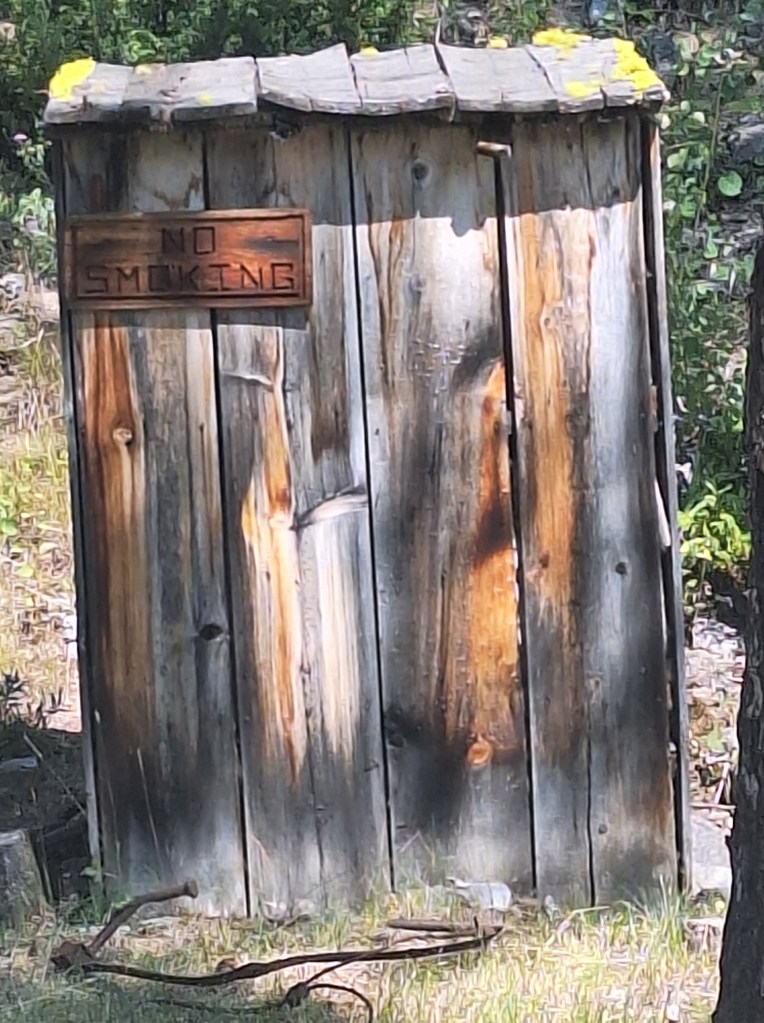
An outhouse. Can you imagine leaving your house to walk several yards away in the middle of winter to use the bathroom? No, thank you.
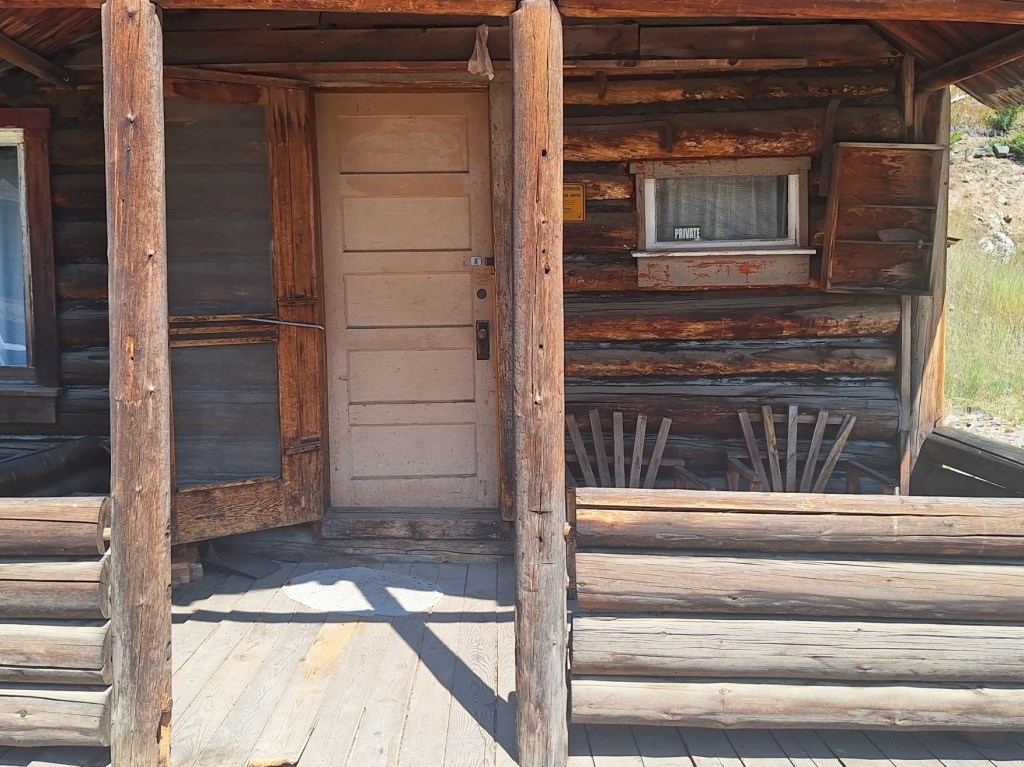
This is the home of a current resident:
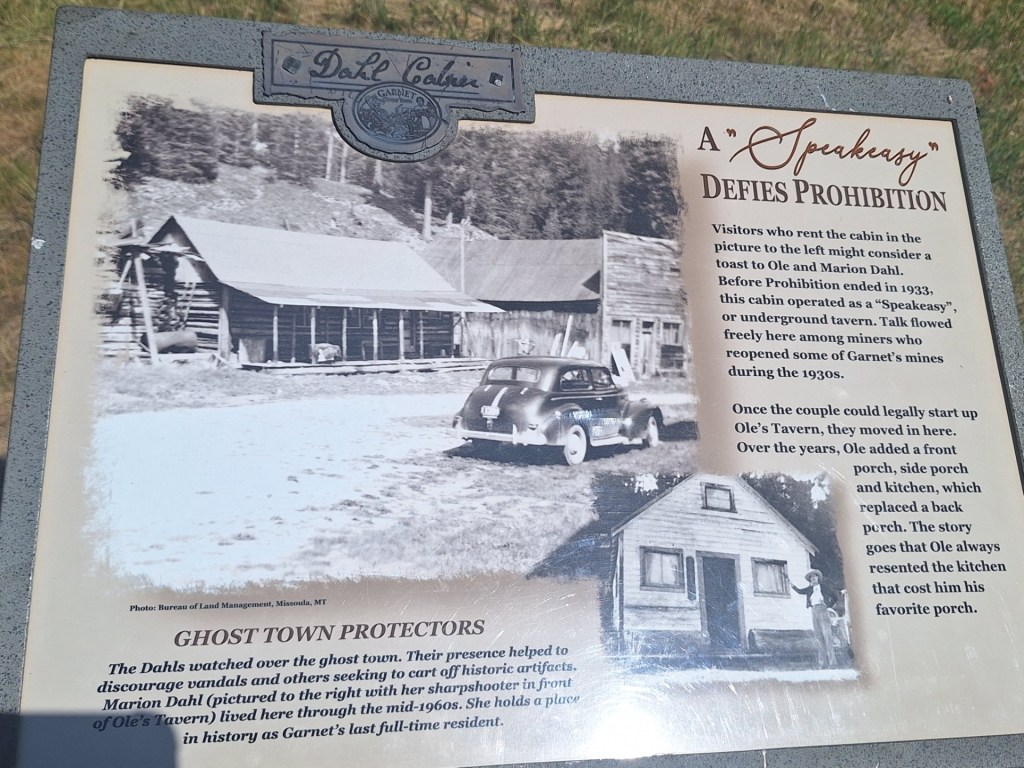
And another informational sign, showing the ‘Speakeasy’ that later became a home to the last resident of Garnet:
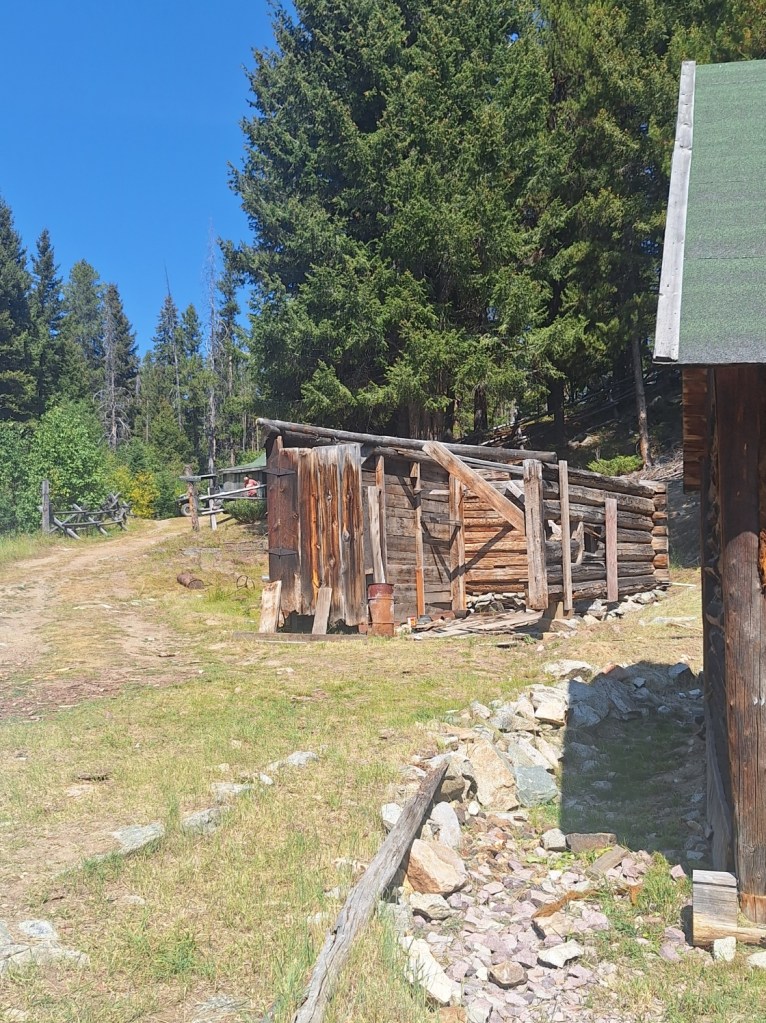
This was likely a small barn for horses or mules:
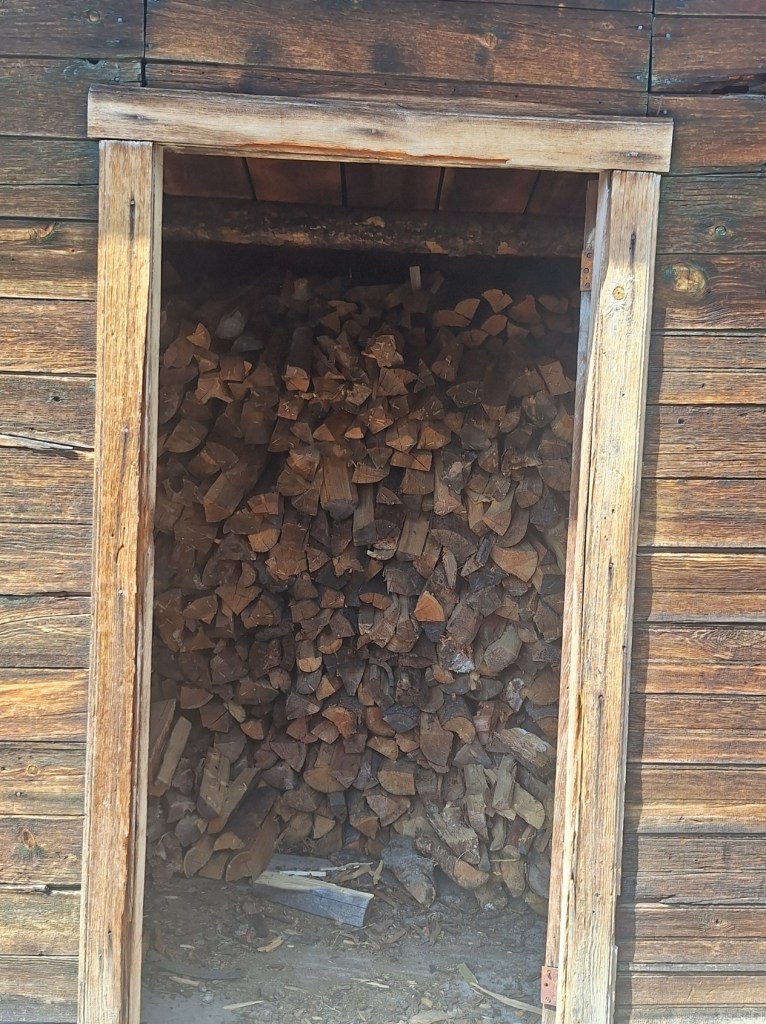
And this building is currently filled with firewood for the coming winter:
Once Prohibition ended, a legal tavern opened, and this sign provides information about that:

Here, Art stops in for a chat with the bartender and a ‘beer’: 😉
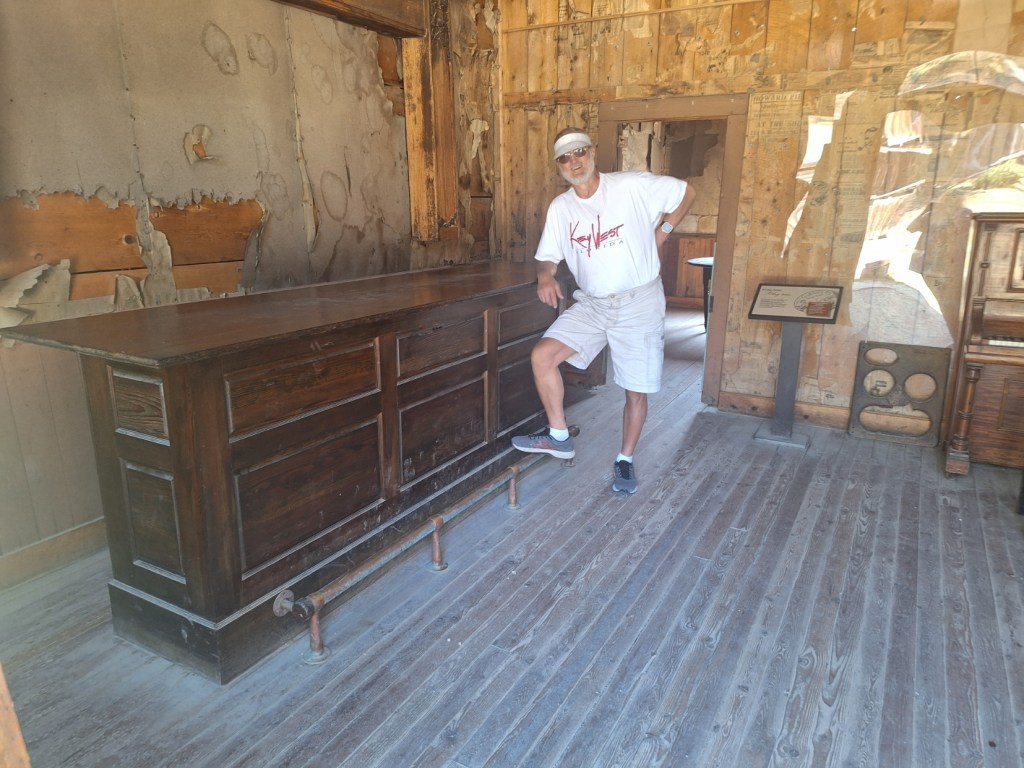
Then Art gets busy at his new job and serves a drink to Jay:

Notice the ‘tar’ paper on the walls, used to insulate buildings. The glow on the wall directly in front of the entry is plexiglass covering newspaper they used as wallpaper.
This is the back room with a couple of rickety tables and a blocked-off stairway leading up to the second floor, where the ladies would have a drink or two:
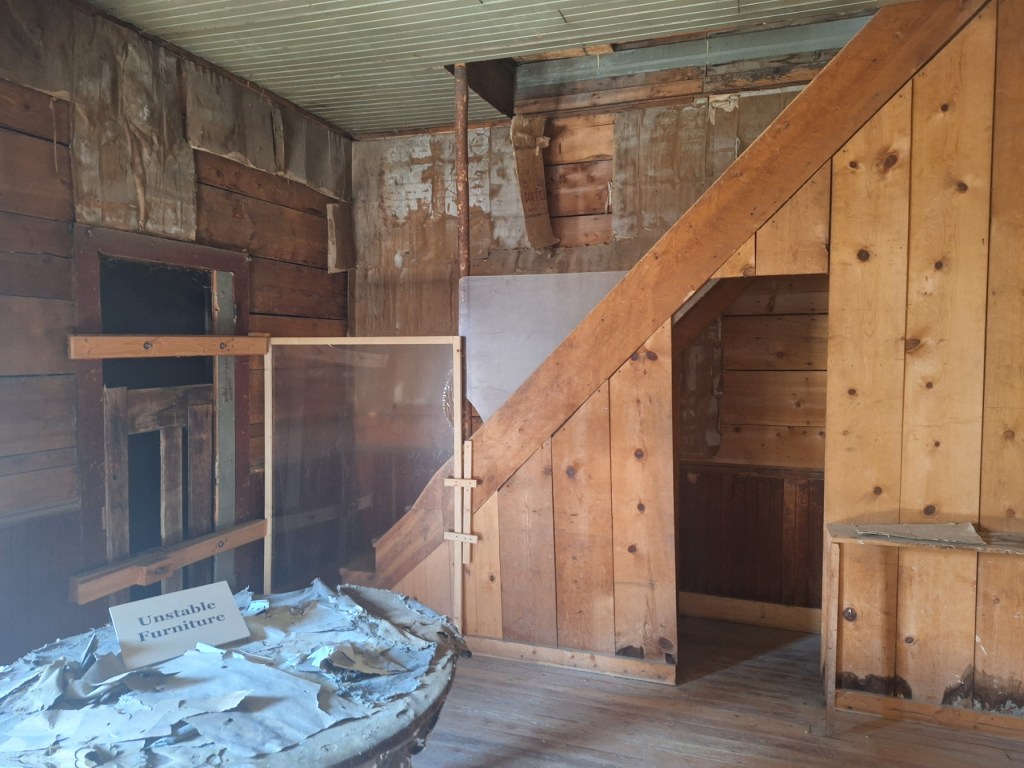
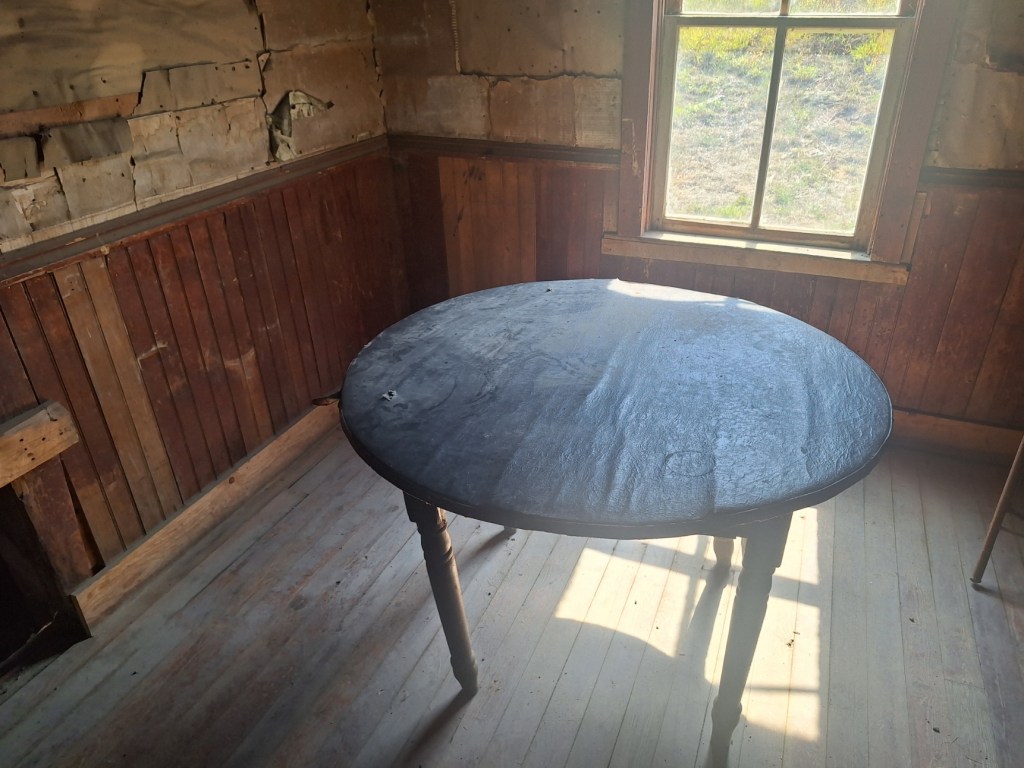
There were warning signs on all furniture so no one would try to sit or lean on them.

Definitely not sturdy:
Frank Davey owned the store in town, and this sign tells that story:

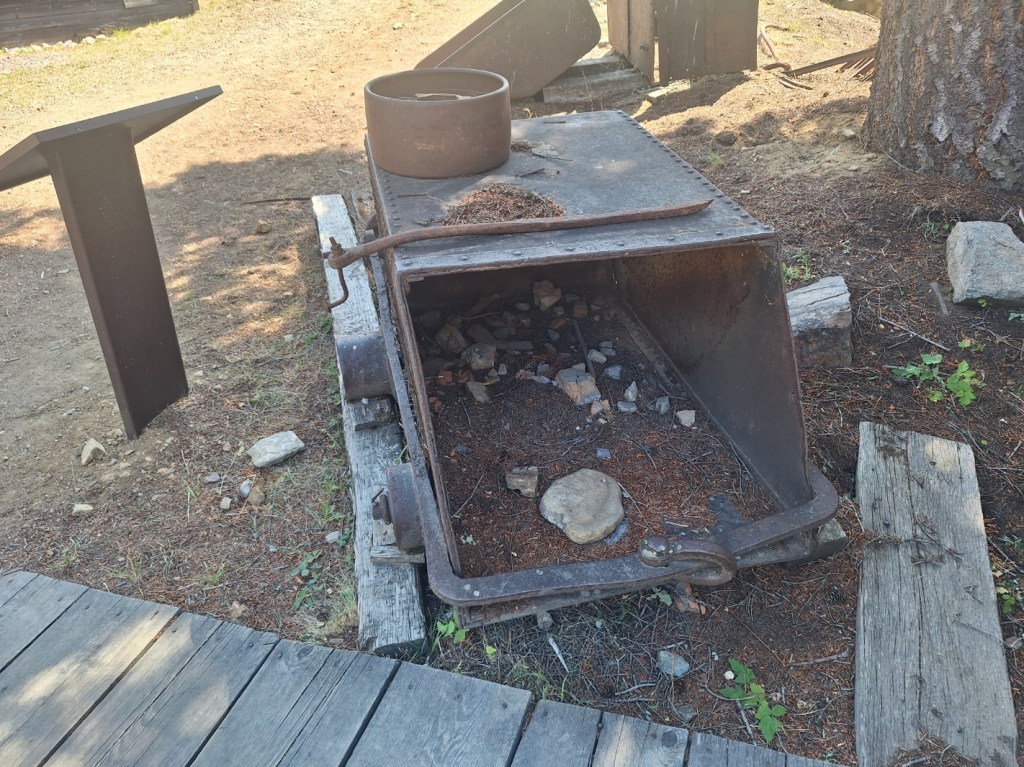
The town is littered with old mining equipment:
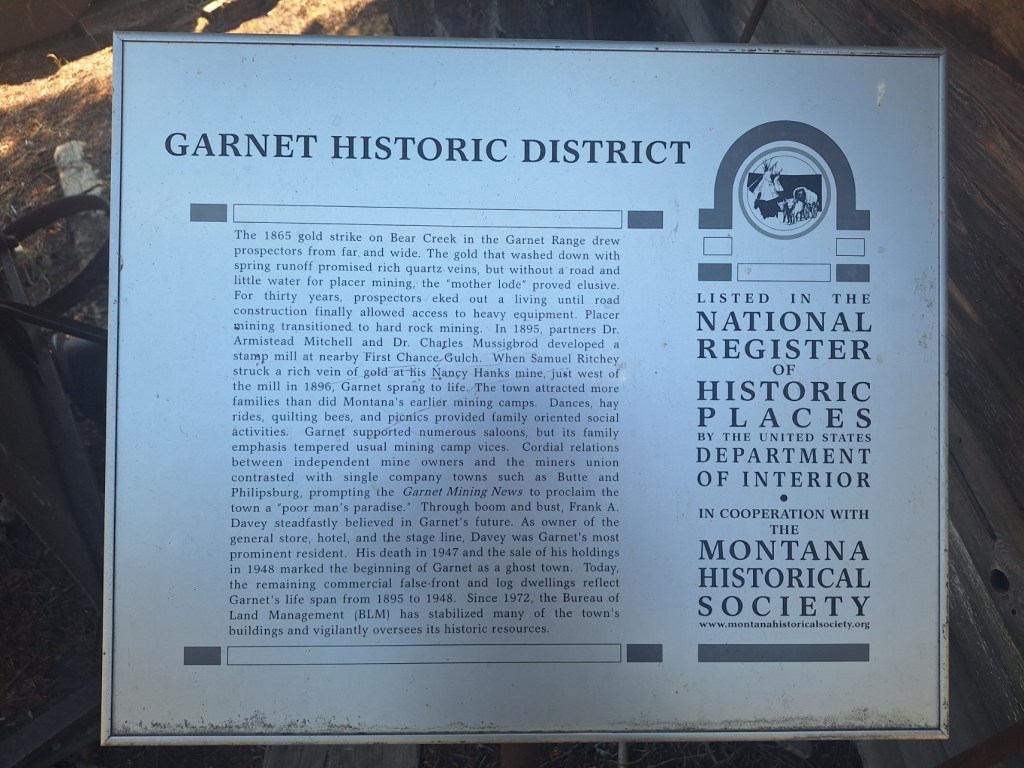
Here is the Historic District signage:
The above were outside Davey’s store and this is what we found inside:
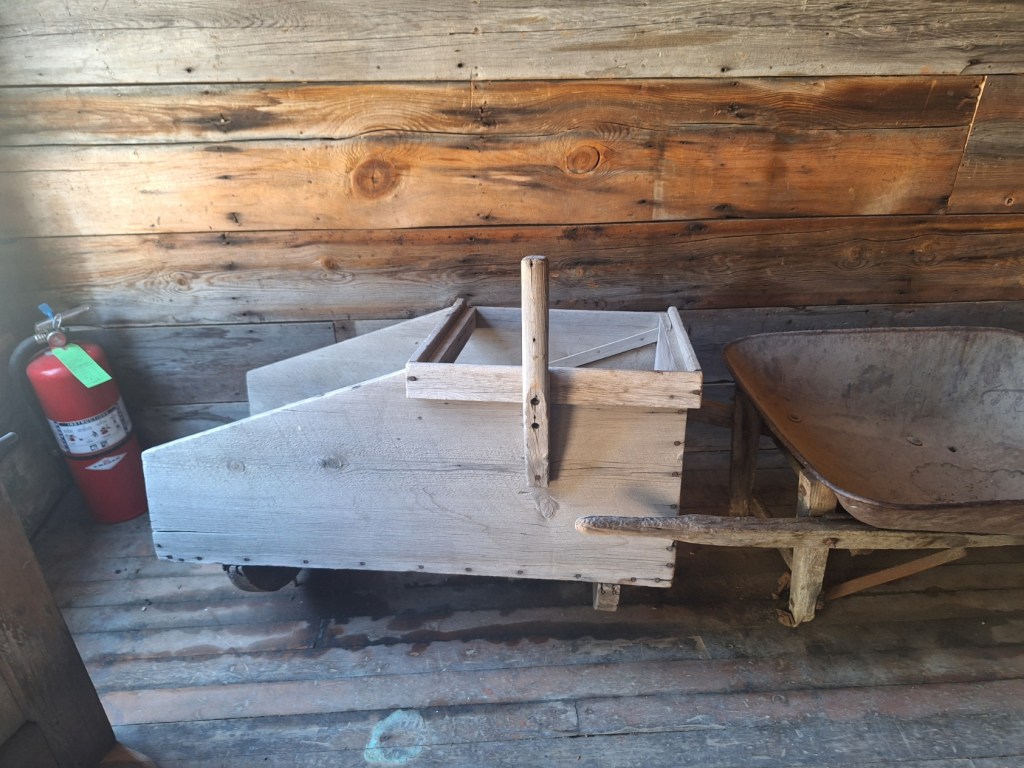
And this prospecting piece:

As you enter the store, though back in the day, I’m sure it was filled with shelves and goods:

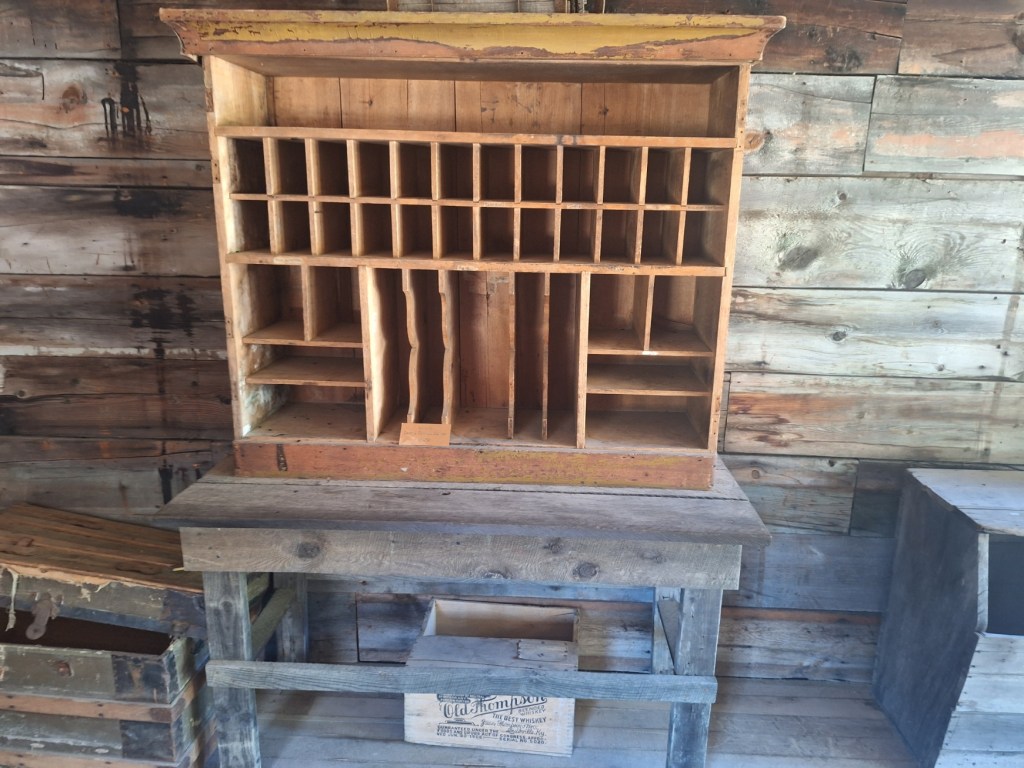
That’s a big barrel for heating in the back right corner. Of course, the general store likely served as the Post Office, too:
This sign explains the passing of the Antiquities Act by President Teddy Roosevelt to protect places and items like those found in Garnet:

A close-up of the barrel heater:

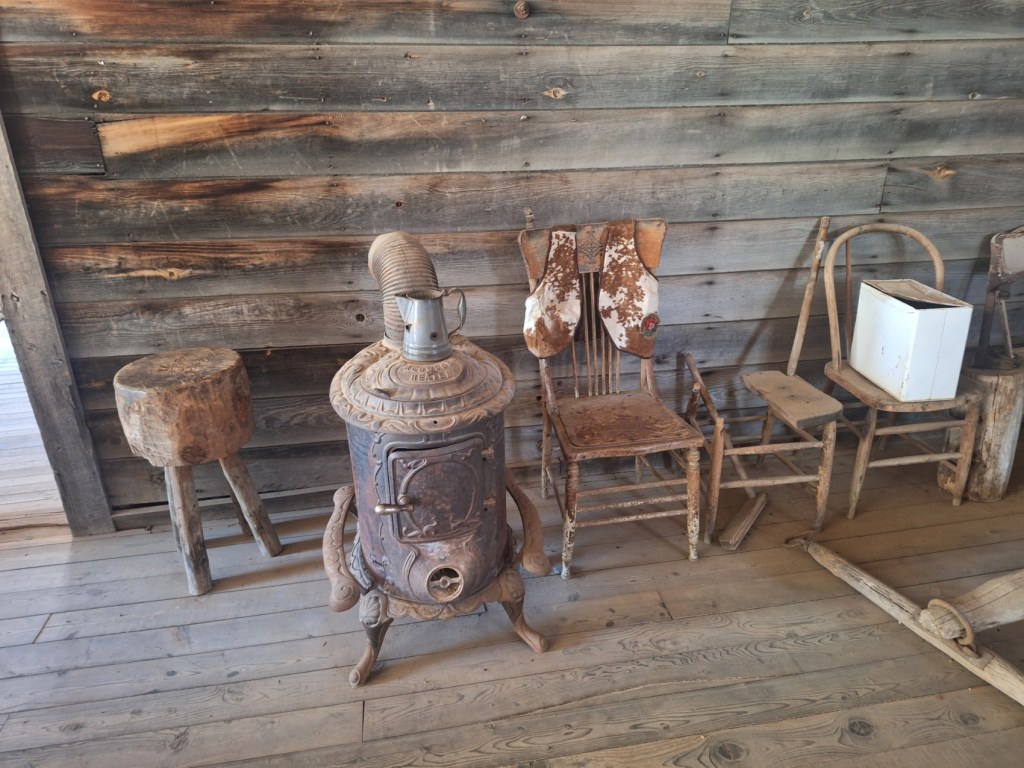
And a variety of chairs and stools, handmade:
You could purchase almost anything you might need at Davey’s:
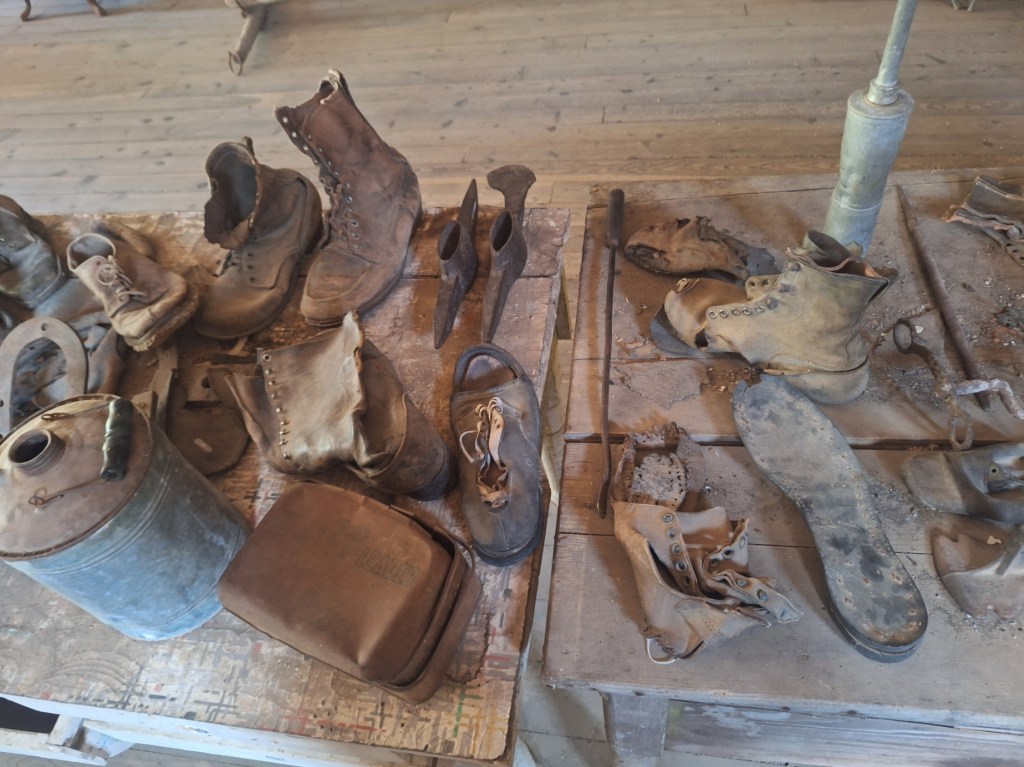
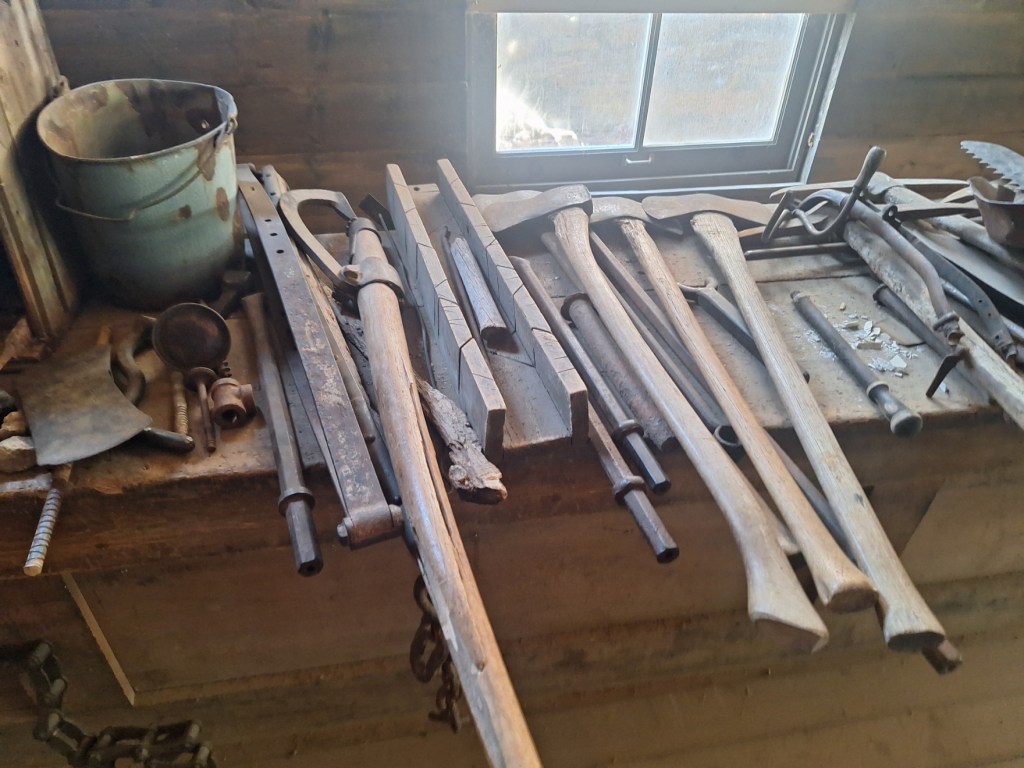
Shoes, boots, axes, bags,
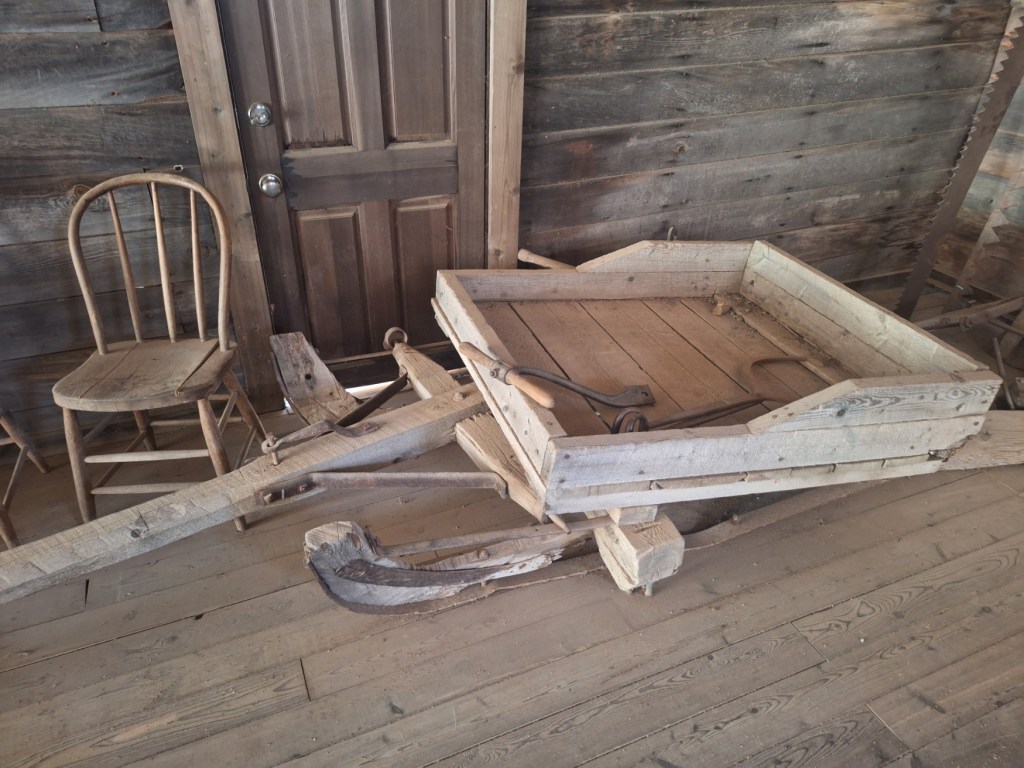
A sled to haul your belongings or your gold to town in winter:
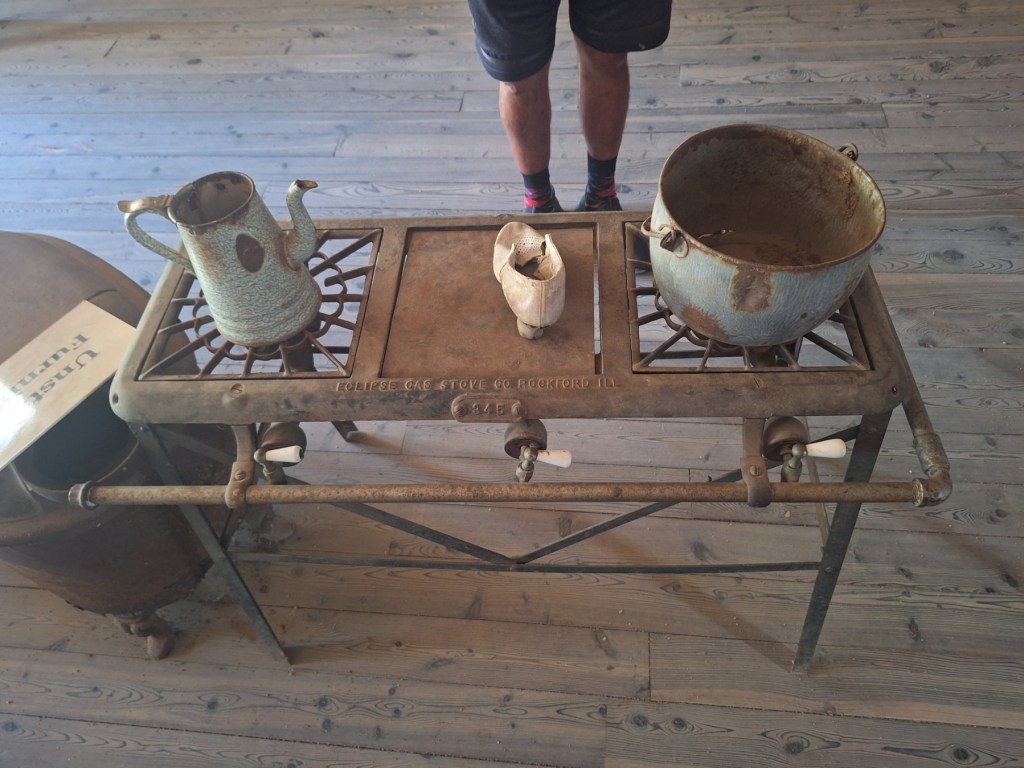
Check out this cook stove:
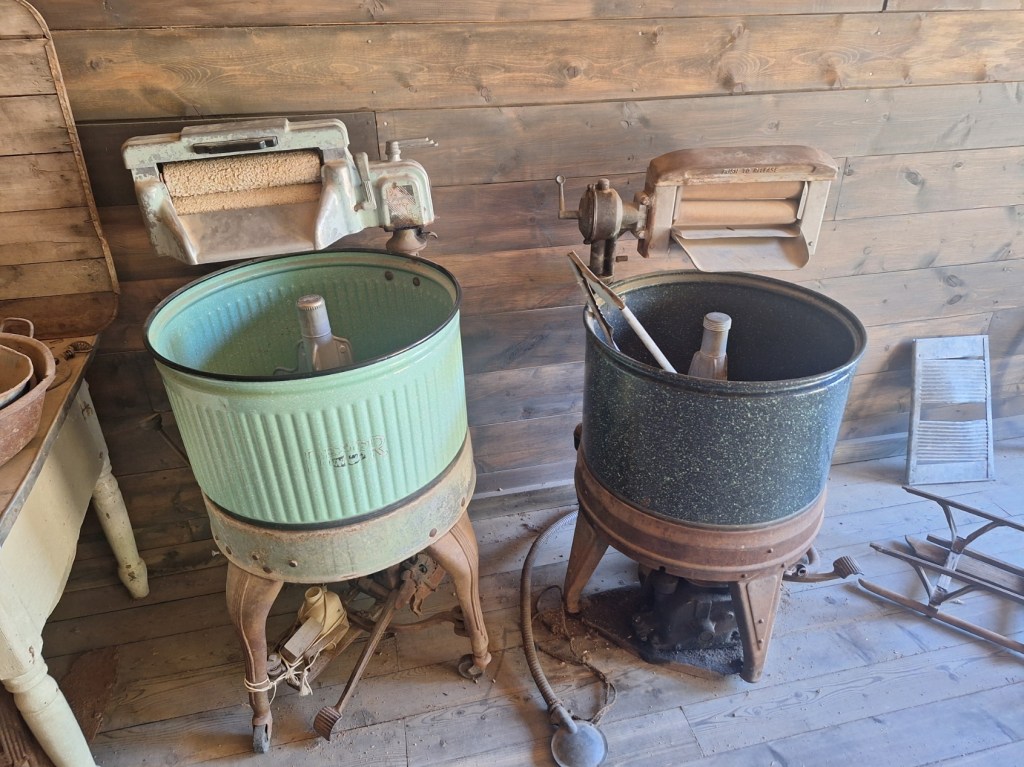
Wringer washing machines…no, thank you:
Need some pots or pans? Davey’s had it:

This is a rare and unique wood-wheeled bicycle, which Jay and Art were very interested in:
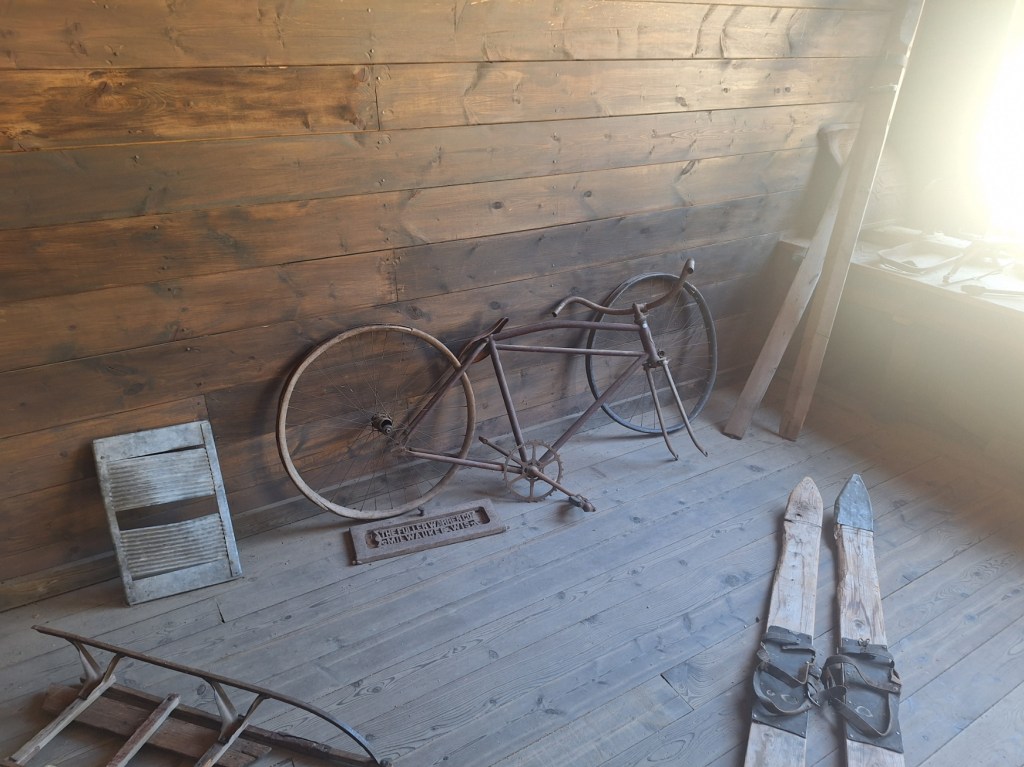
Some handmade skis:

Davey’s supplied it all:

The front of Davey’s store:

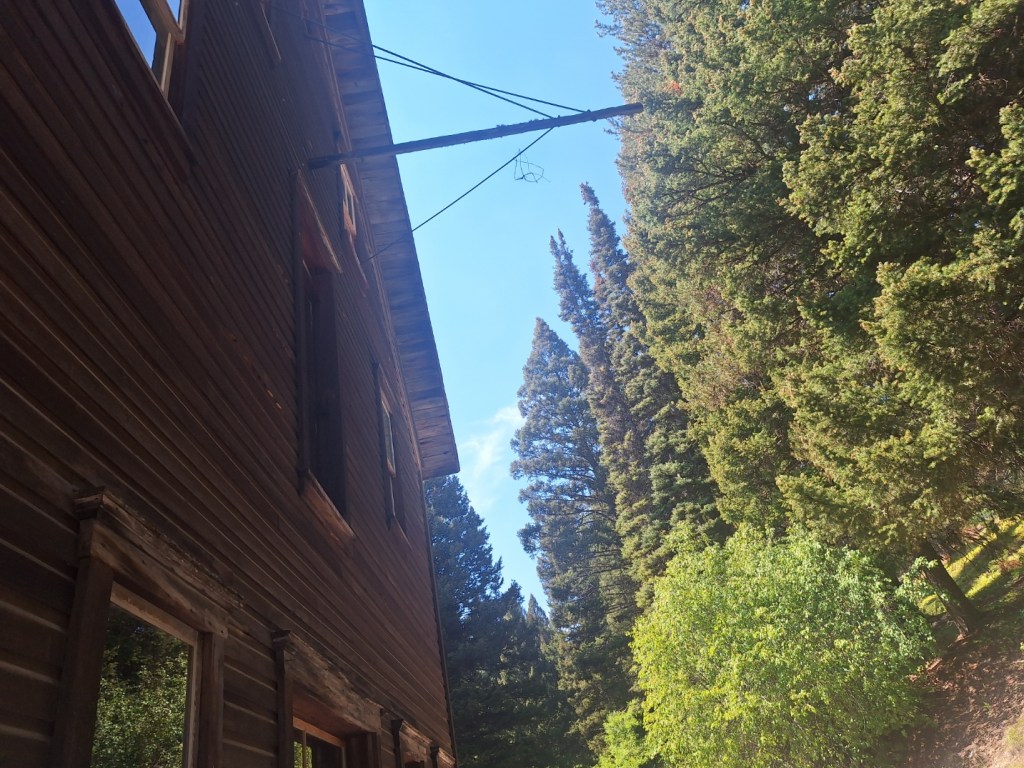
On to the hotel next door, owned by JK Wells. There was a pulley in the front where large trunks were lifted to pull into rooms:
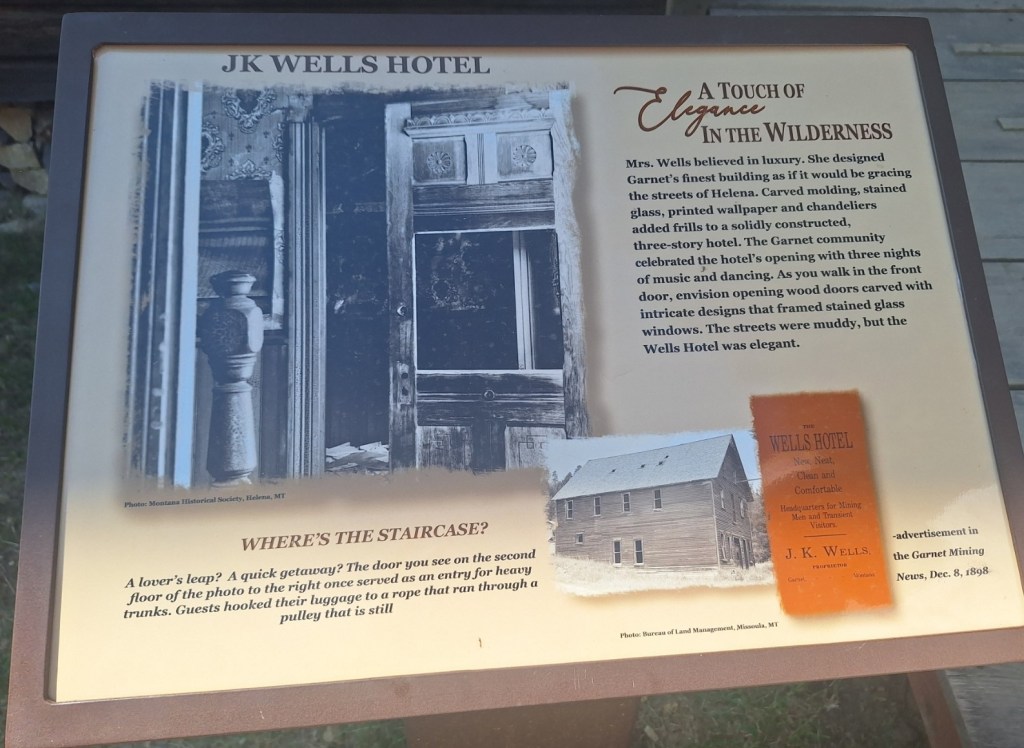
Here is information about the building:
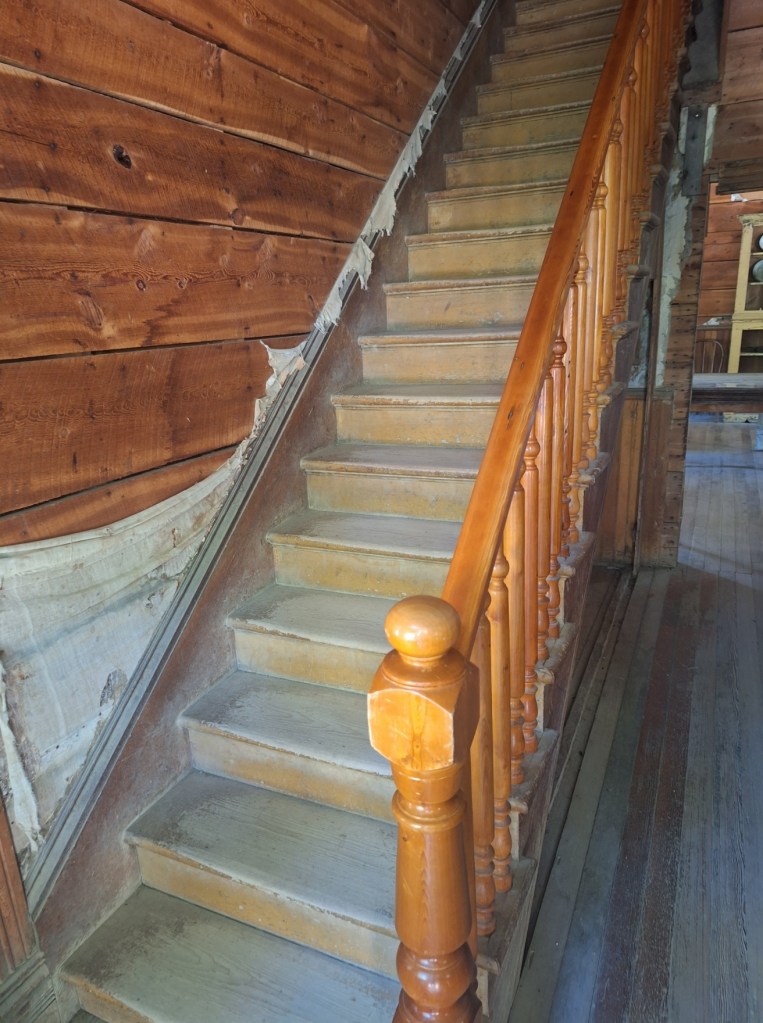
The staircase as you enter the front door:
In the sitting room off to the left, you can see the wallpaper and some furniture that remains:
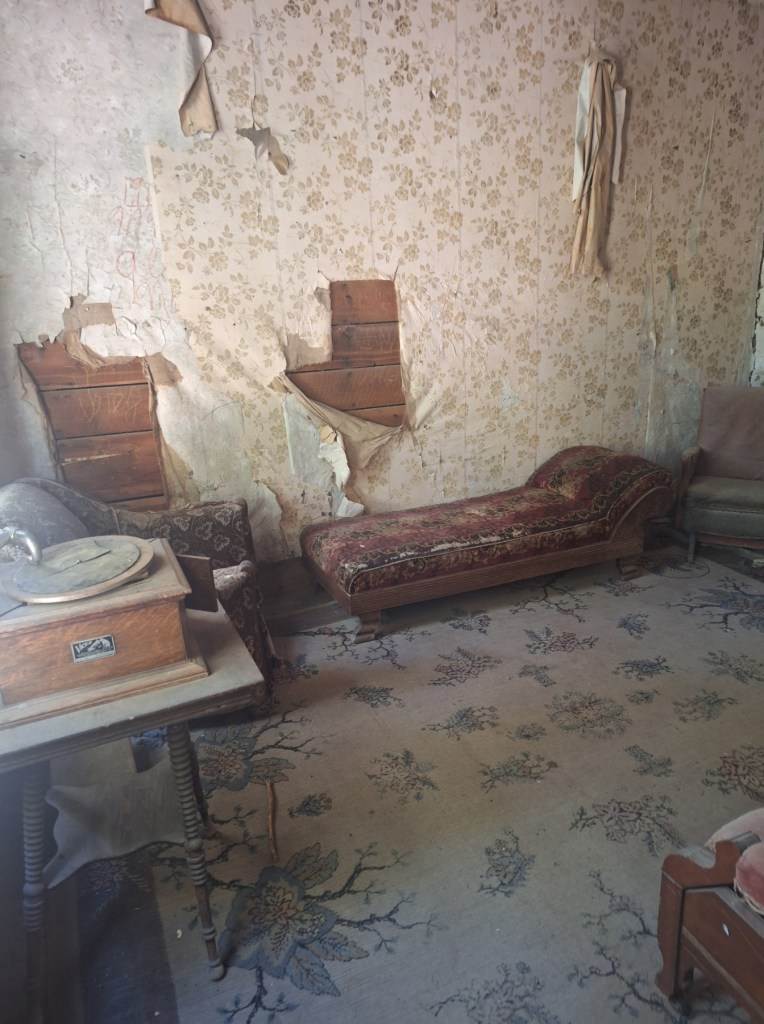
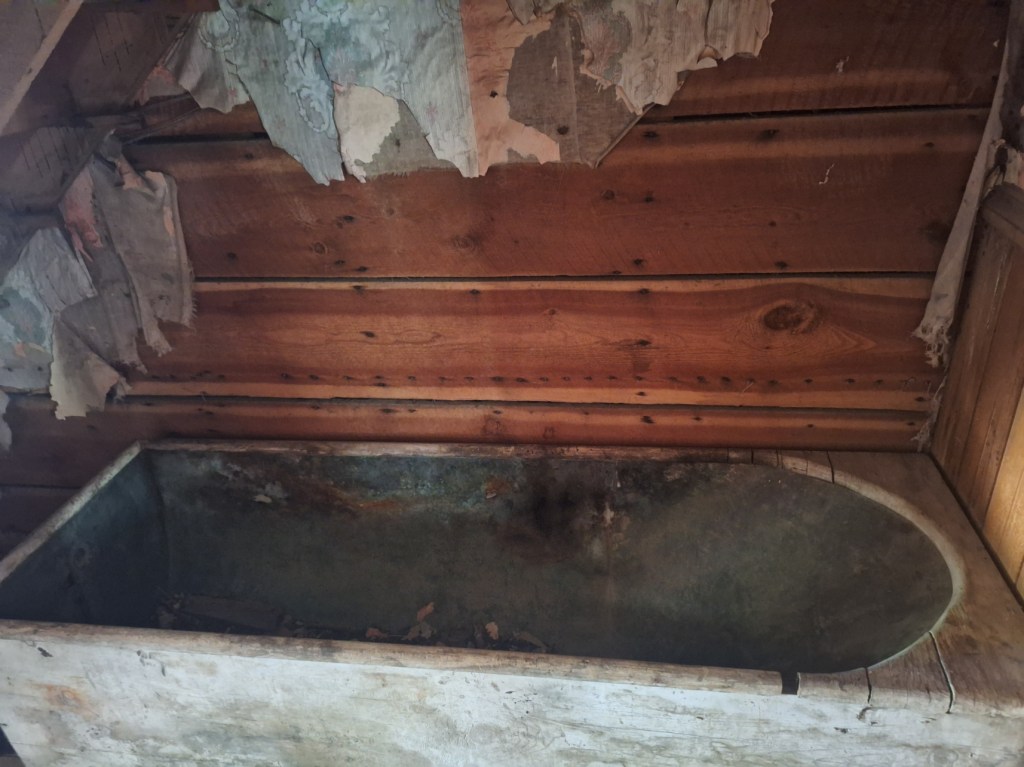
Clapboard, which is visible where the wallpaper is missing, was used by the wealthy. Most homes and buildings used logs. This bathtub was under those stairs. What, you wouldn’t put one where the most traffic is? Yeah, me either.
A kitchen area in the back, and this front room was likely for dining:

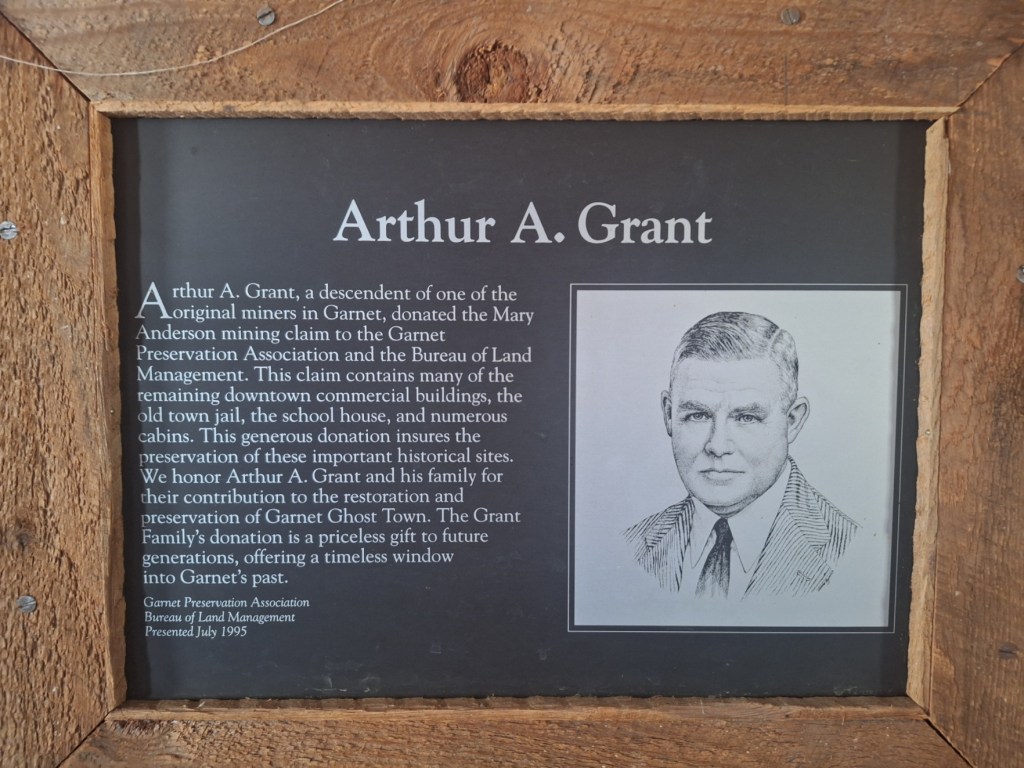
So this is cool. How generous:
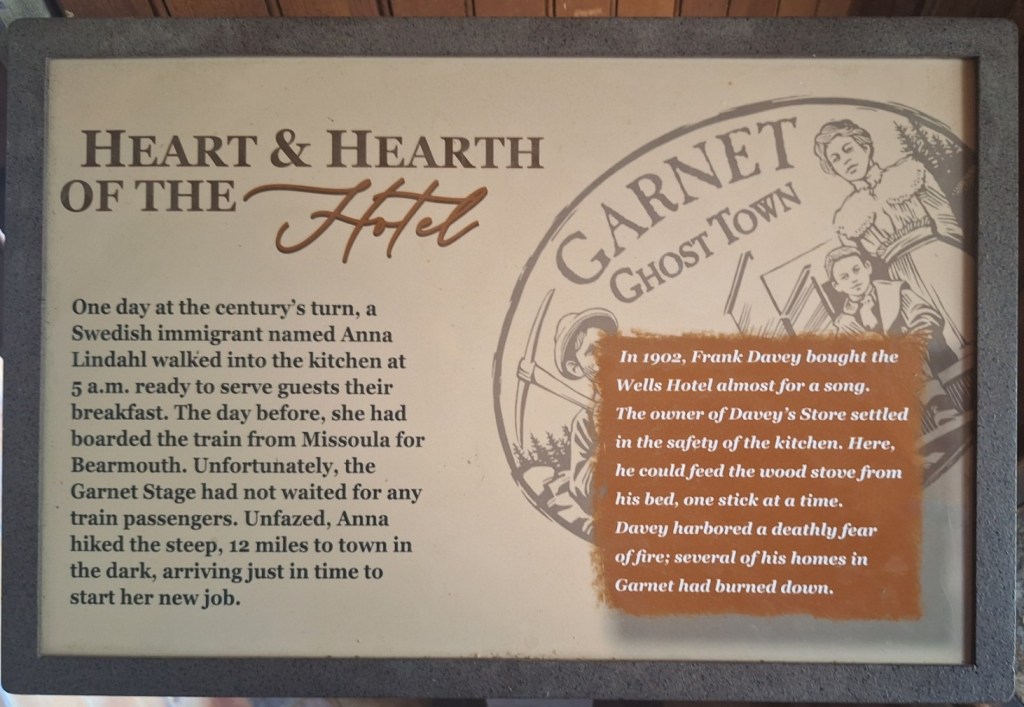
This information about the kitchen area:
If my kitchen looked like this, I’d run, screaming, into the night – LOL:

And here:

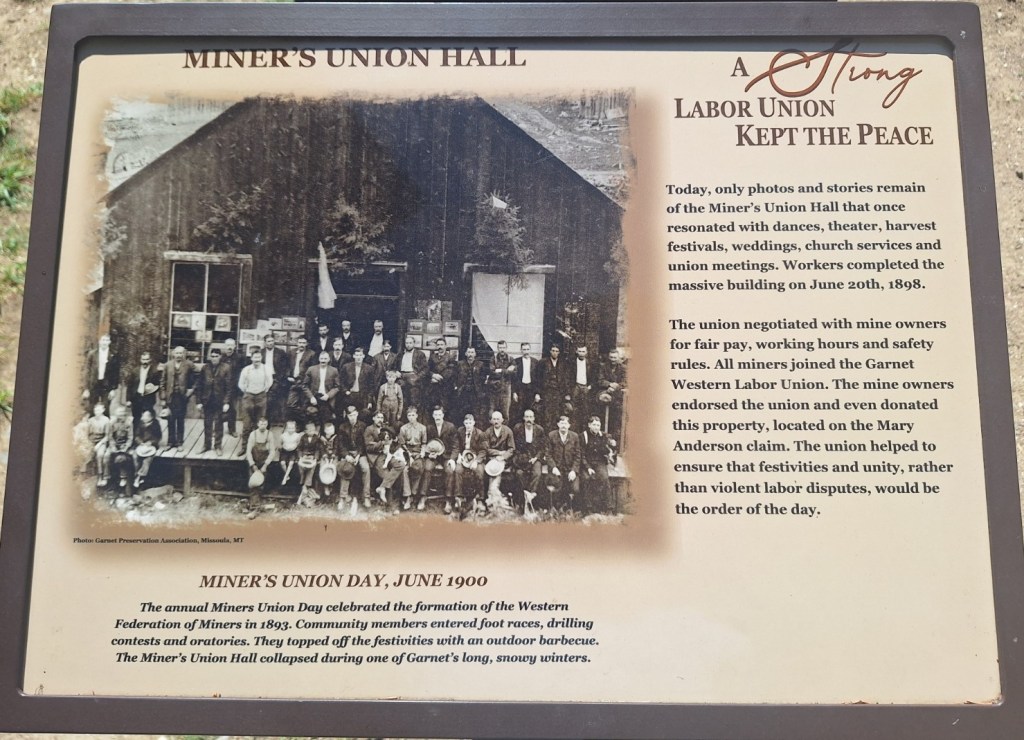
There was a union hall in later years:
There was a small visitor’s center that used to be a saloon. In its heyday, there were thirteen saloons in town! And the visitor’s center was one of them:

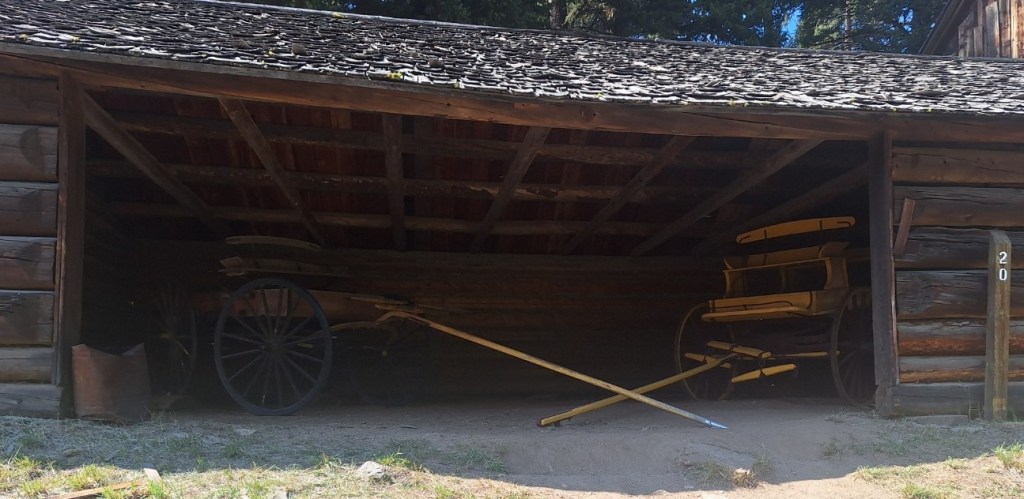
This shed held a couple of old buggies:
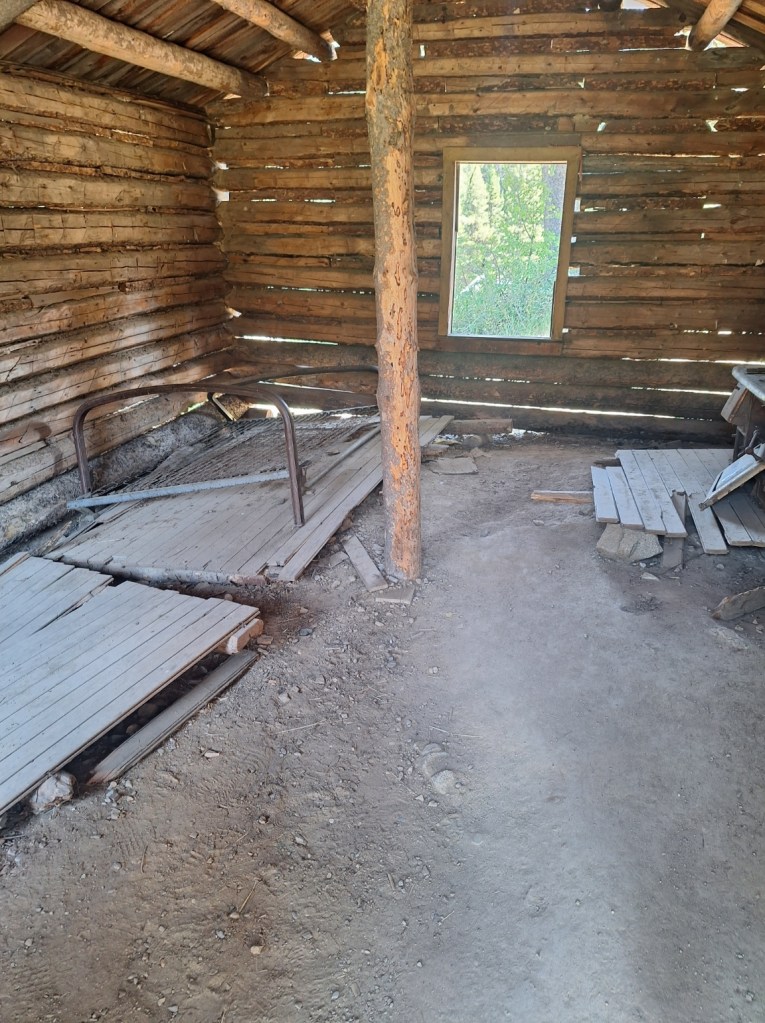
The newlywed cabin. I’m assuming it was much nicer back then! LOL
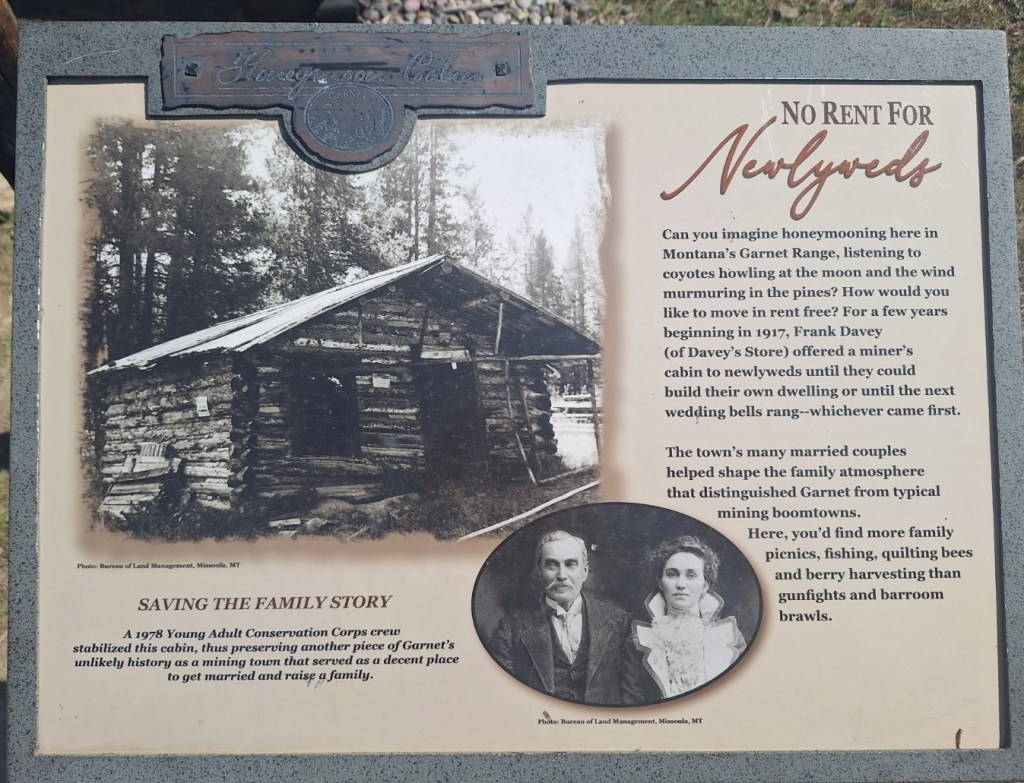
The information about it:
The Sam Adams home:
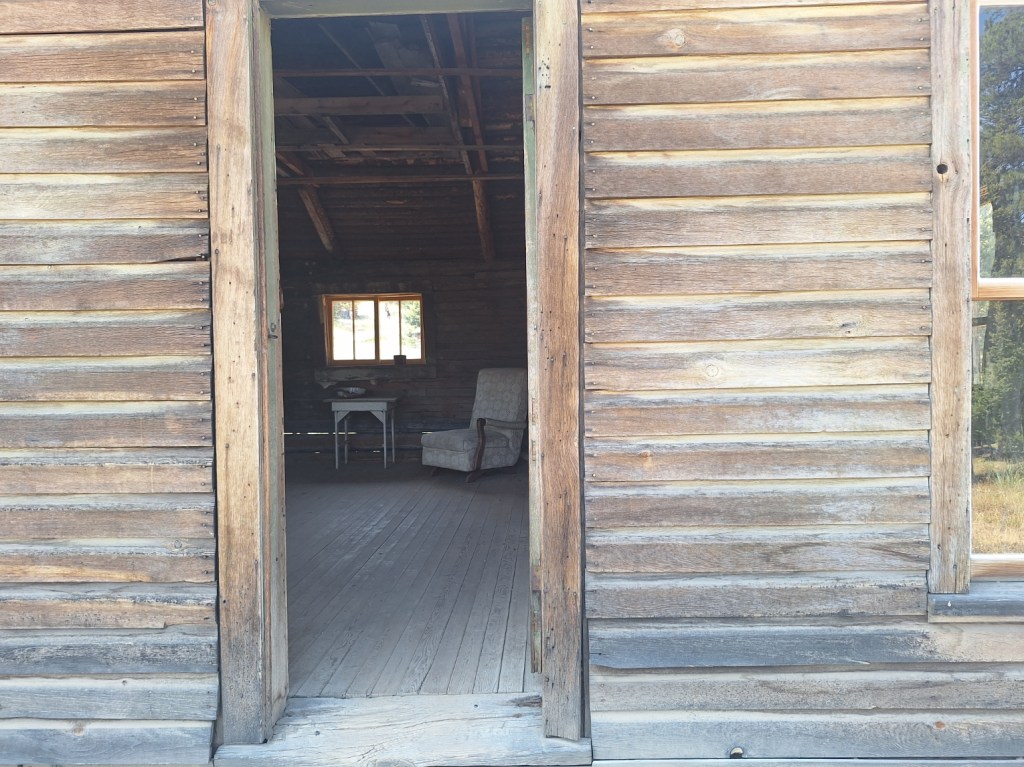
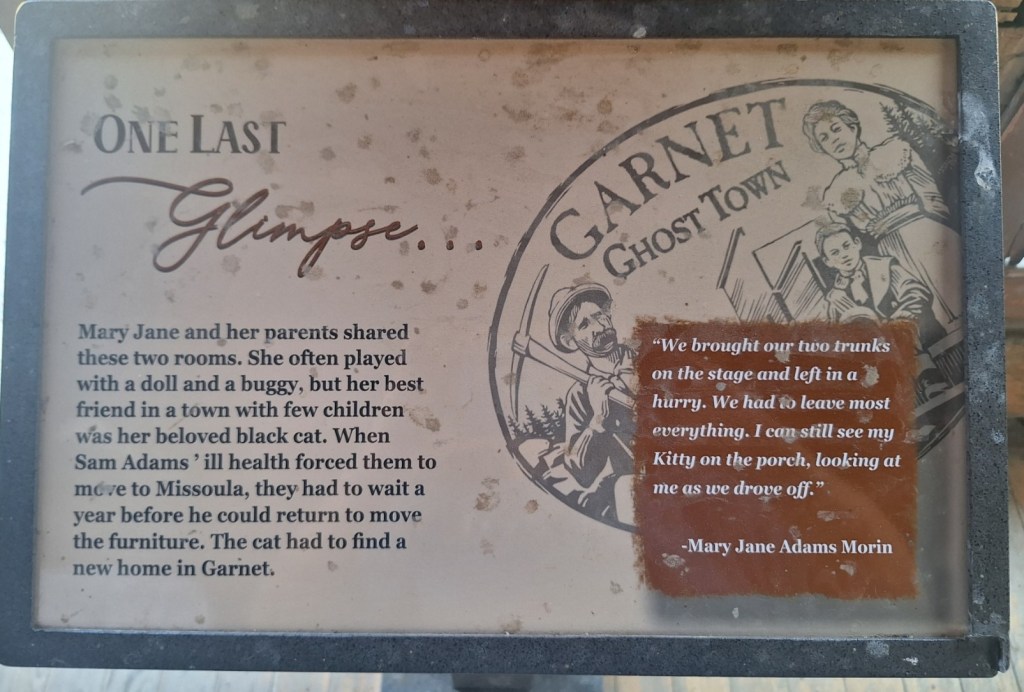
This next sign tells about the sad and good times within the walls of this home:

And this additional information:
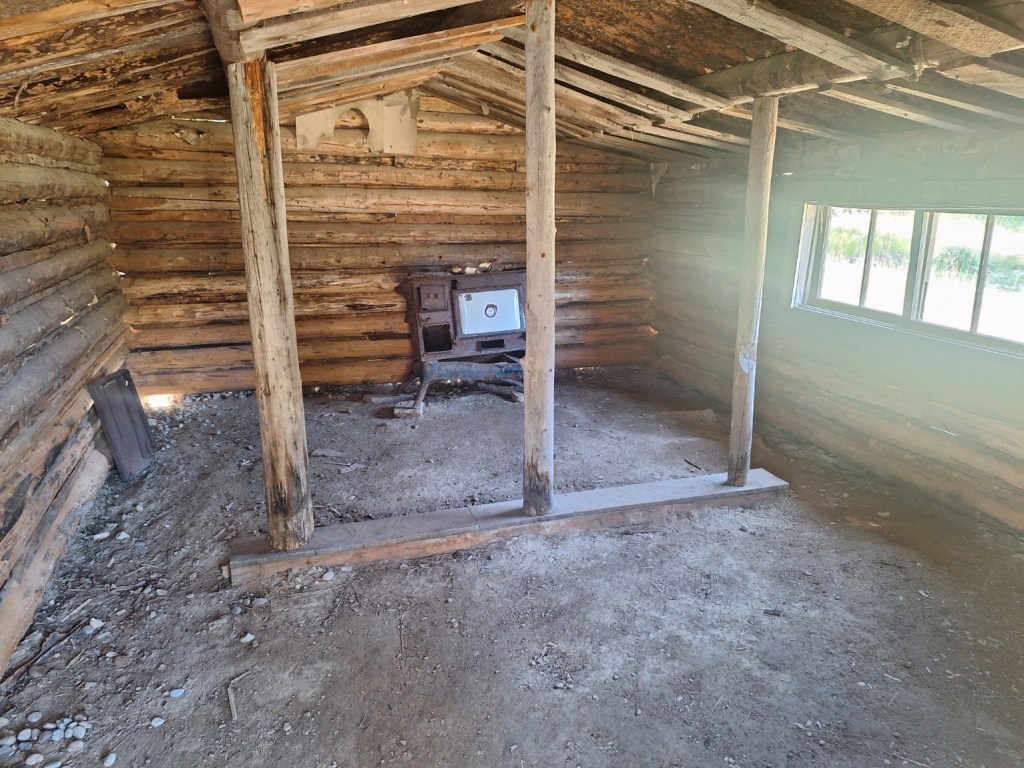
Inside, these items remain:

An iron stove. Can you imagine trying to move that thing? Or bringing it up to Garnet in a wagon?
A bedroom, second room:

I took some other photos of cabins and the insides:
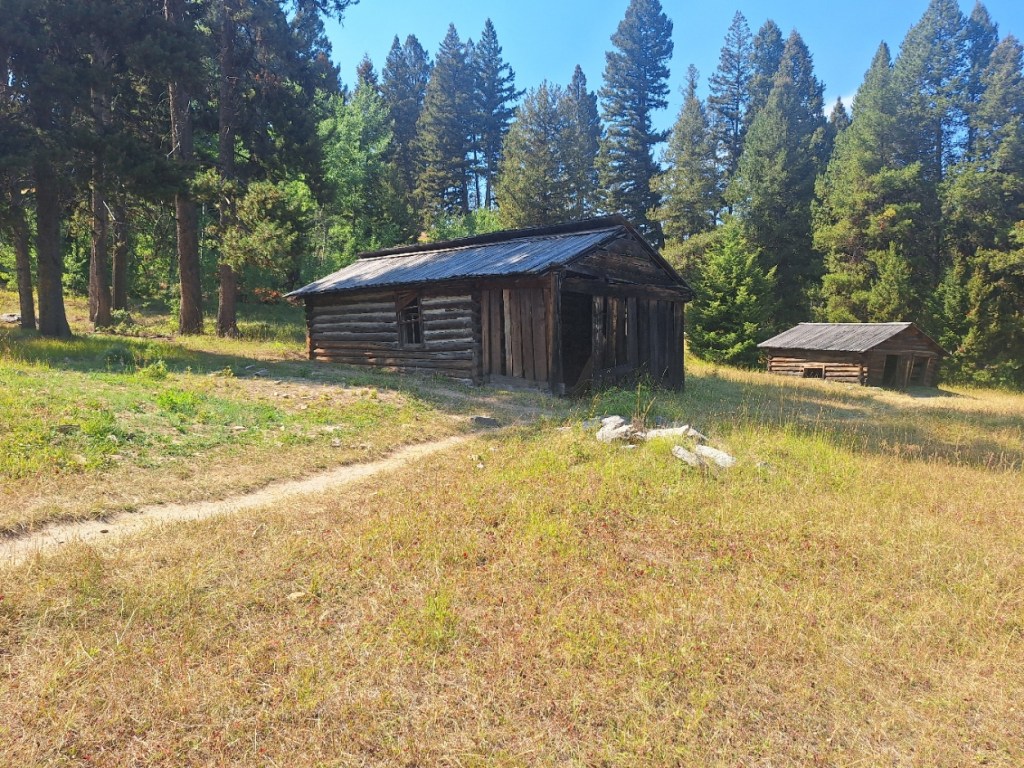
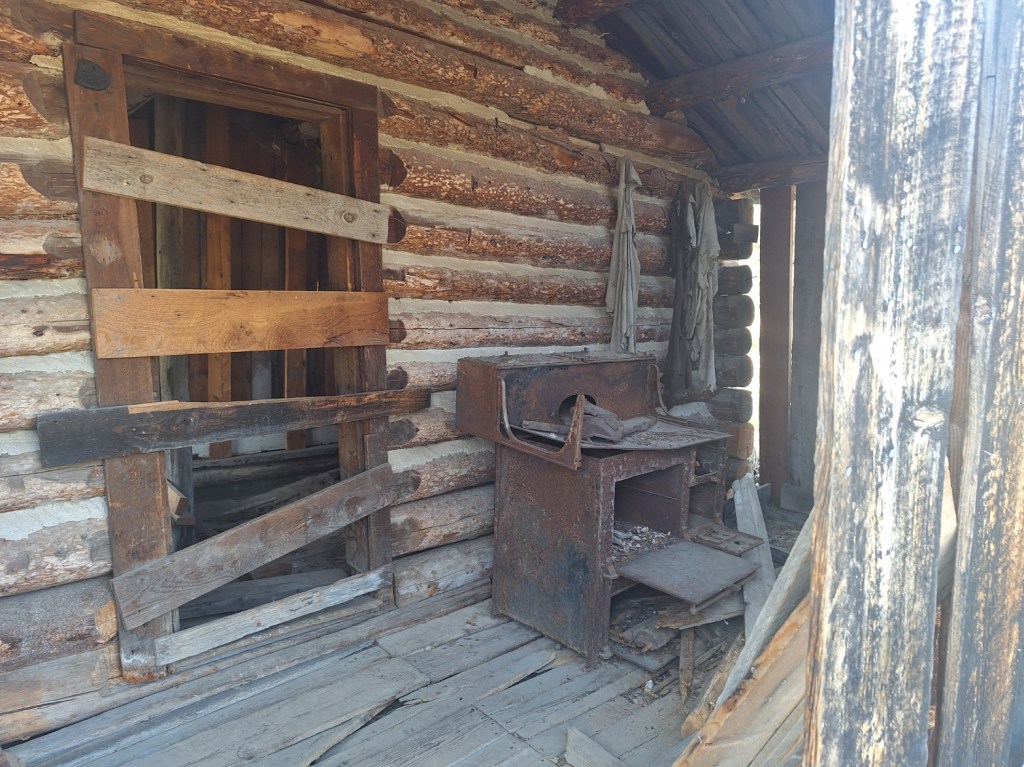
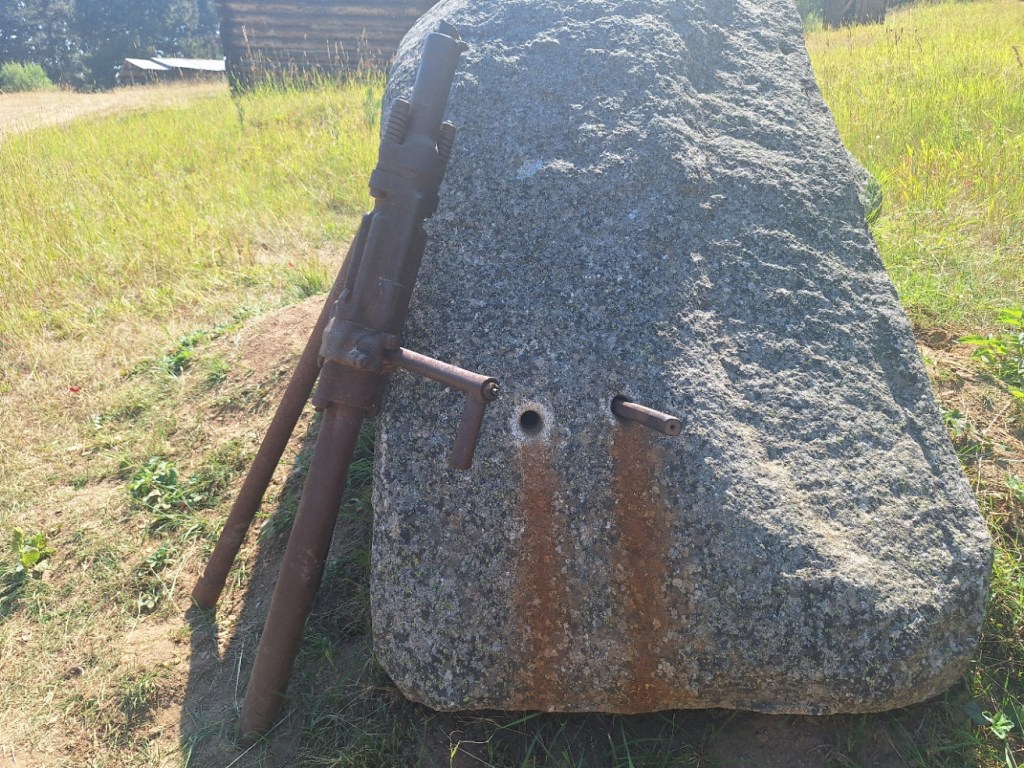
A photo showing part of the mining community. This is how they prepared a rock to place in dynamite.
Billy Liberty was the forge owner and took people up and down the path to the nearest town:

The next couple of photos are of the inside of the forge. Look at the size of the billows! Art stood beside it for comparison:

A work area and equipment, and then a wooden wagon wheel – the real deal:
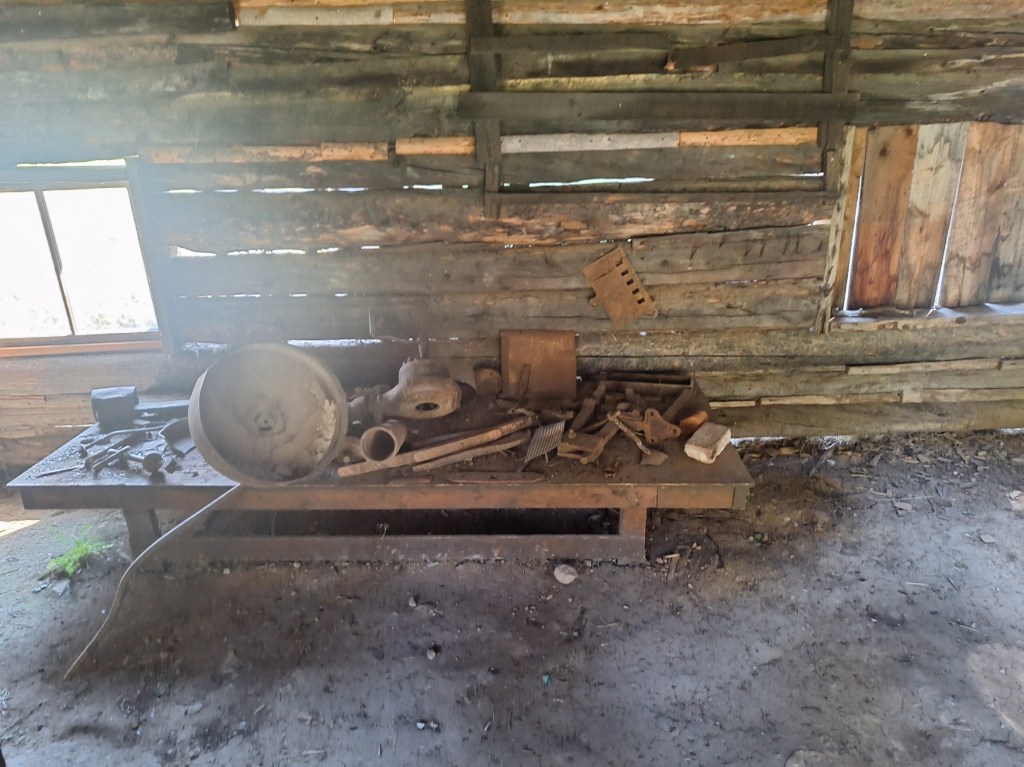
Wagon wheel:

The Wells Hotel outhouse:
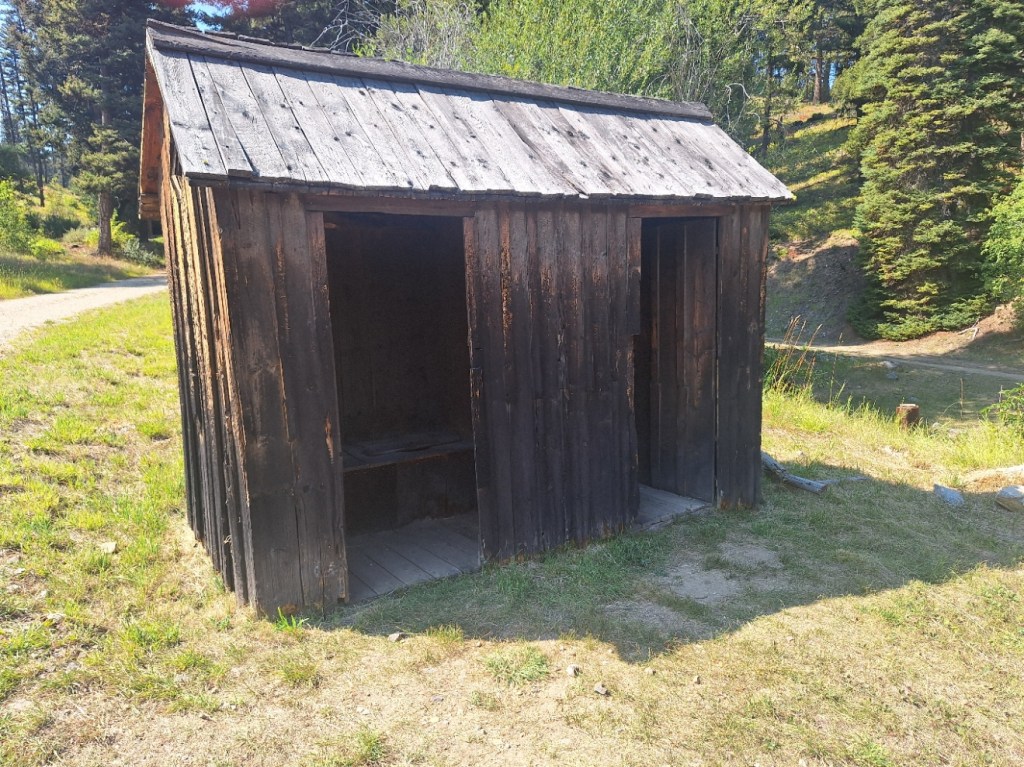
And a close-up of the inside, sort of. I did not walk that close – LOL:

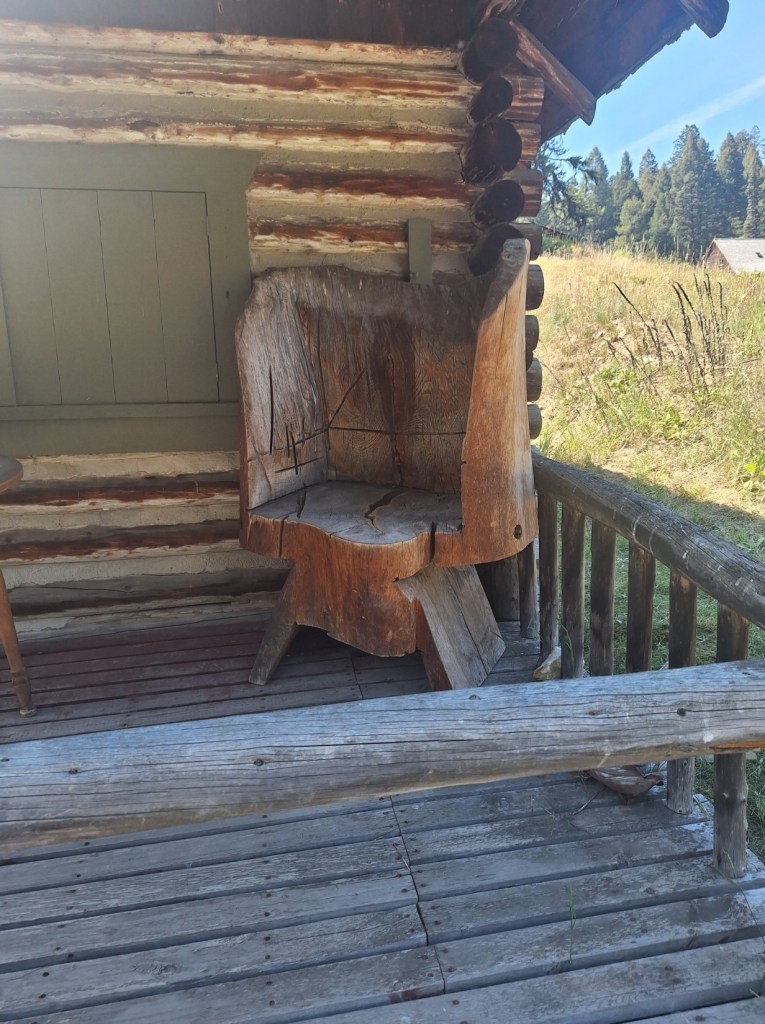
And on this photo from one of the residences currently being lived in. I thought this chair was so cool:
There was much, much more, folks. You will need to visit to see it all, but I was fascinated and truly enjoyed this visit!
Next Up: Gearing up for changes and getting on with Our Hero riding!
 On Hummingbirds Wings